
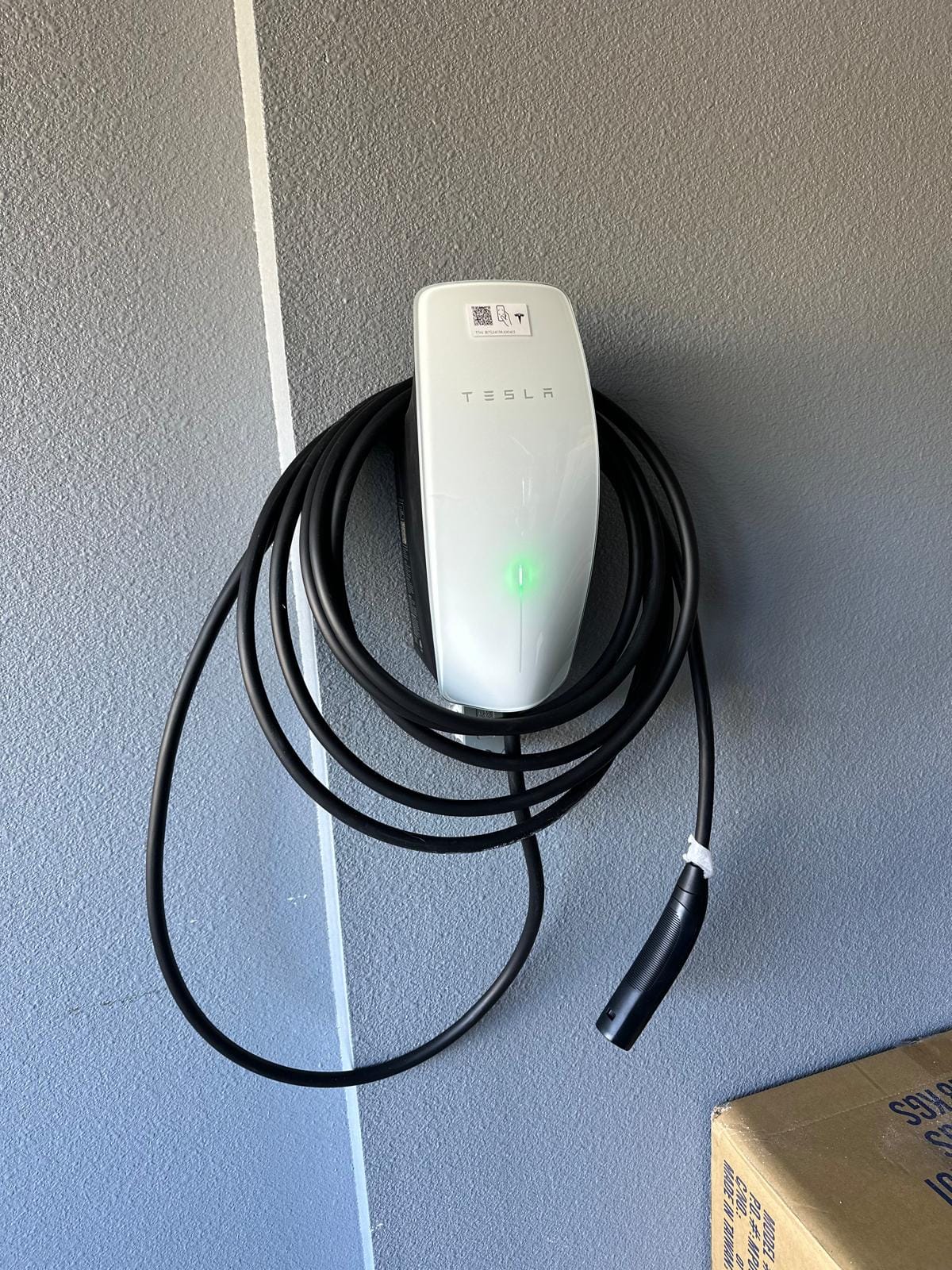
Adding a Level 2 charger can make home charging more convenient by allowing many electric vehicles to recharge overnight. The installation involves more than mounting a charging unit: it requires a suitable electrical circuit, a check of your home’s available capacity, and compliance with the requirements of your local permitting authority.
In this guide, we explain what homeowners should consider before scheduling EV charger installation in Las Vegas, including charger selection, electrical capacity, permits, and factors that affect cost. RS Electric LLC provides residential electrical services in Las Vegas and throughout Nevada.
What Level 2 home charging provides
Level 2 charging uses 208- or 240-volt electrical service. Many residential systems use 240 volts, while the vehicle, charger output, and circuit setup all affect charging speed. The U.S. Department of Energy’s Alternative Fuels Data Center notes that charging time varies with factors such as battery capacity, battery charge level, vehicle capability, and the power delivered by the equipment.
A Level 2 setup is commonly selected by homeowners who want to charge at home without relying on a standard 120-volt outlet. The right charging rate depends on your driving needs and what your electrical system can safely support. A higher-rated charger does not automatically mean your vehicle will charge faster; the vehicle’s onboard charging capability also matters.
Check your home’s electrical capacity first
Before choosing a charger or setting an installation date, have a qualified electrician assess the electrical system. The evaluation should consider the main service rating, panel capacity, available breaker space, the proposed circuit route, and other major electrical loads in the home.
EV charging is treated as a continuous load, so the circuit must be sized for the charger’s specified output and applicable requirements. As examples, a charger operating at 32 amps may require a 40-amp circuit, while a 48-amp charger may require a 60-amp circuit. These are general examples, not a design recommendation for a specific home. The charger’s listing, installation instructions, local code requirements, and the electrician’s assessment determine the correct setup.
A home with an older or heavily loaded panel may still have options. Depending on the assessment, a homeowner may be able to use a lower charging setting or an approved load-management solution. Some projects may require additional electrical work, such as a panel or service upgrade. A panel’s labeled rating alone does not establish that it has capacity for a new EV charging load.
Choose a practical charger location
Select a location that lets the charging cable reach the vehicle’s charge port without creating a trip hazard or placing unnecessary strain on the cord. Consider where you usually park, which side of the vehicle faces the wall, and whether the charger will be installed indoors or outdoors.
If you are comparing hardwired equipment with a receptacle-based setup, discuss the options with your electrician. A permanent installation must use equipment and wiring suited to the location and intended use. Do not assume that an existing household outlet, or an outlet installed for a different purpose, is appropriate for regular EV charging.
Confirm the permit requirements for your address
Permit requirements depend on where the home is located. Las Vegas, Henderson, North Las Vegas, and unincorporated Clark County may have different application processes and inspection requirements. The City of Las Vegas and Clark County both publish permit guidance describing when permits are required for electrical work.
Before work begins, confirm the applicable permit and inspection process with the authority having jurisdiction for your property. Ask whether the contractor’s estimate includes permit coordination and required inspections. Keep the permit records and final inspection approval with your home documents.
What affects Level 2 EV charger installation cost?
Level 2 EV charger installation cost depends on the actual work required at the property. A straightforward installation with suitable panel capacity and a short, accessible circuit route differs from a project that needs extensive conduit, a long wire run, difficult access, or additional panel work.
When comparing quotes, ask whether the price includes:
- The charger or only the electrical installation
- Circuit materials, breaker, conduit, and wiring
- Labor and installation at the proposed location
- Permit fees and inspection coordination
- Any necessary load-management equipment
- Panel or service upgrades, if needed
- Trenching, wall repair, or other site work, if applicable
Request an itemized estimate after the electrical system and proposed route have been evaluated. That makes it easier to compare the scope of work and avoid basing a decision on a price that excludes important requirements.
What to expect during installation
A typical project begins with a review of the panel, charging equipment, and parking area. The electrician determines the appropriate circuit and charger location, confirms local permit requirements, and explains any additional work before installation proceeds.
Once the required approvals are in place, the electrician installs the circuit and charging equipment, then checks that the system operates as intended. Keep the charger’s installation information, permit documentation, inspection record, and final invoice for future reference.
Local installation support in Las Vegas, Henderson, and North Las Vegas
Whether you need EV charger installation in Henderson, NV or a home EV charger electrician in North Las Vegas, the first step is a site-specific electrical assessment. We review your service and panel, consider the route to the parking area, and discuss equipment options that fit your home and vehicle.
RS Electric LLC has served customers from Las Vegas throughout Nevada since 2013. We provide residential and commercial electrical services, including EV charger installation, electrical system setup, lighting and fixture installation, and troubleshooting and repairs. We focus on quality workmanship, code-conscious installations, and efficient project completion.
For more information, see our EV charger installation services or contact our team. RS Electric LLC is a Nevada C-2 licensed electrical contractor (License #0078370) and a certified Minority Business Enterprise.
Contact RS Electric LLC
Cell: 702-303-6817
Email: rselectriclv@gmail.com
Website: rselectriclv.com
Frequently asked questions
Do I need to upgrade my panel for a Level 2 charger?
Not necessarily. An electrician should evaluate the home’s electrical load and panel capacity before recommending a solution. Depending on the findings, options may include a lower charger setting, load management, or additional electrical work.
Is a permit required for home EV charger installation?
Permit requirements depend on the property’s jurisdiction and the scope of work. Confirm the current process with the local building or permitting department and clarify who will coordinate permits and inspections.
Should I buy the charger before getting an estimate?
It is useful to compare equipment options, but have an electrician review the charger specifications and your home’s electrical capacity before making a final purchase. This helps confirm that the selected equipment and planned circuit are compatible with the installation.
How do I get an estimate?
Contact RS Electric LLC at 702-303-6817 or through our contact form. We can review the project details and discuss the next steps for EV charger installation in Las Vegas and nearby communities.