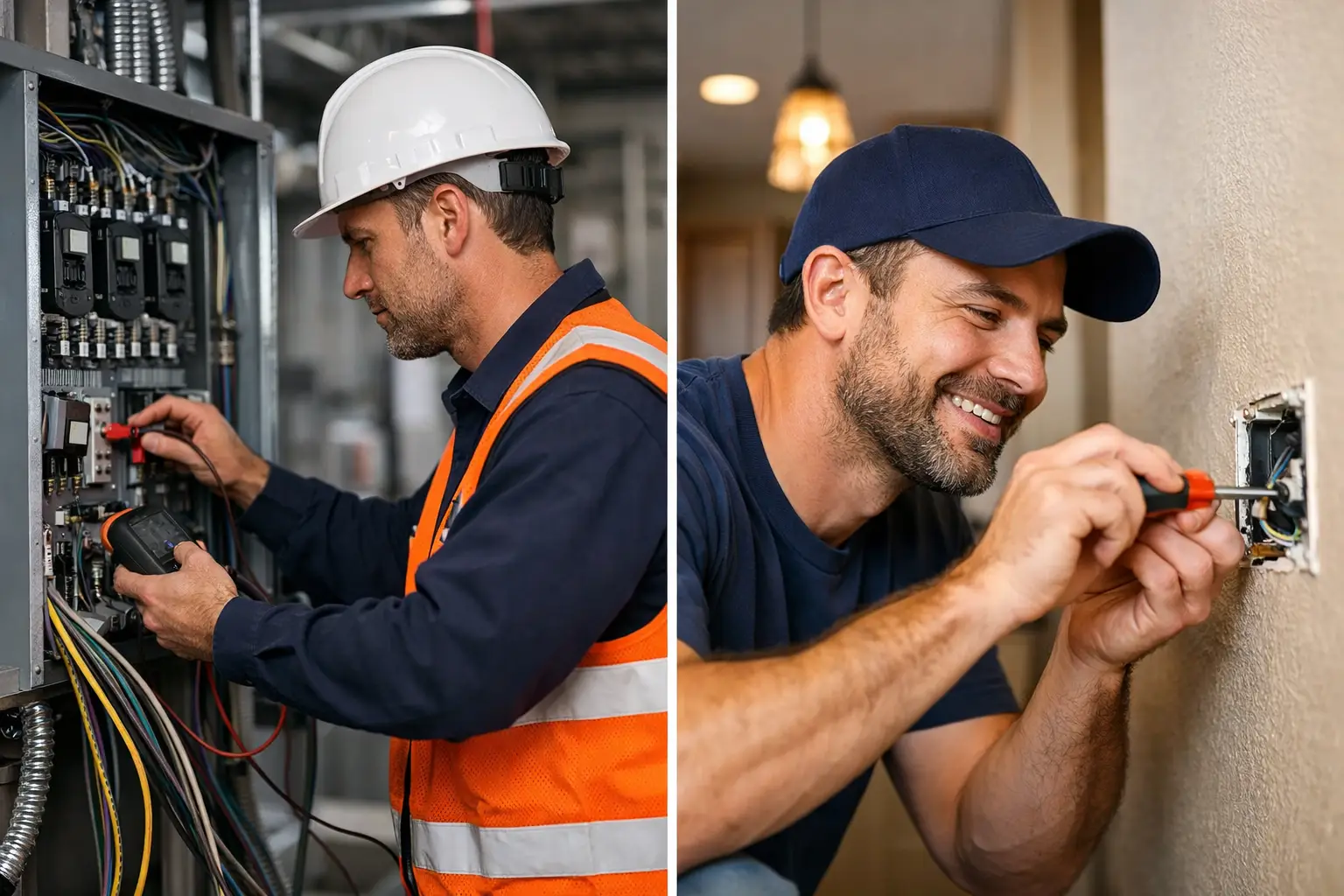

A panel upgrade for a custom home and a full electrical buildout for a retail suite may both involve wires, breakers, and permits, but they are not the same job. If you are comparing a commercial vs residential electrician, the difference goes far beyond the type of building. It affects design, code requirements, load demands, scheduling, safety planning, and the kind of experience you want on site.
For property owners and business decision-makers in Las Vegas, hiring the right electrician is not just a technical choice. It is a budget, timeline, and risk-management decision. The wrong fit can lead to delays, failed inspections, expensive rework, or electrical systems that do not match how the space is actually used.
Commercial vs residential electrician: what changes?
At the simplest level, a residential electrician works on homes, while a commercial electrician works on business properties and commercial facilities. That sounds straightforward, but the day-to-day reality is more specialized.
Residential work typically centers on single-family homes, townhomes, condos, and apartment units. These projects often include panel changes, lighting upgrades, outlet additions, smart home wiring, remodeling support, EV charger installation, and troubleshooting for service issues or damaged circuits. The systems are usually lower voltage, the layout is more familiar, and the end goal is comfort, safety, and practical use for daily living.
Commercial work is built around offices, retail spaces, restaurants, warehouses, tenant improvements, and mixed-use properties. These jobs can involve heavier electrical loads, three-phase power, larger service equipment, dedicated circuits for equipment, emergency lighting, code-driven occupancy requirements, and tighter coordination with other trades. In many cases, the electrician is not just wiring a space. They are helping support business operations, code compliance, and future flexibility.
That is why commercial and residential experience should not be treated as interchangeable, even when both electricians are licensed.
The biggest technical differences
One of the clearest differences is load demand. Homes are designed around household appliances, HVAC systems, lighting, electronics, and increasingly, smart devices and EV charging. Commercial properties often need to support refrigeration, office systems, commercial kitchen equipment, servers, signage, security systems, and larger HVAC loads running for longer hours.
That changes how circuits are planned, how panels are sized, and how service upgrades are approached. A residential electrician may be highly skilled at wiring a new custom kitchen or correcting outdated home wiring. A commercial electrician may spend more time working with conduit systems, dedicated equipment feeds, service distribution, and buildouts that must meet a business tenant’s layout and operating needs.
The installation methods also differ. In many homes, wiring is hidden behind finished walls and framed around residential construction methods. In commercial buildings, electricians often work with exposed conduit, metal studs, drop ceilings, and larger-scale distribution systems. The work can require more coordination with fire alarm contractors, HVAC installers, inspectors, landlords, and property managers.
Then there is the code environment. Both fields require strict compliance, but commercial projects usually face broader occupancy rules, emergency egress lighting standards, ADA-related planning considerations, and more documentation during permitting and inspections. Residential code work is no less serious, but the complexity of commercial compliance tends to be higher.
When a residential electrician is the right fit
If your project is centered on a home or living space, a residential electrician is usually the right choice. That includes new home construction, remodels, lighting upgrades, service changes, home office circuits, outdoor lighting, pool-related electrical work, and correcting older or unsafe wiring.
A good residential electrician also understands how homeowners think. You are not just asking whether a circuit can be installed. You are asking whether the lighting will feel right in the kitchen, whether the panel upgrade will support future additions, whether the work can be done cleanly, and whether the solution makes sense for your budget.
This is especially true in custom homes or remodels, where the electrical work has to support design goals as much as code requirements. Placement matters. Appearance matters. So does keeping disruption under control when the home is occupied.
For homeowners, the best contractor is often the one who can explain the problem clearly, offer practical options, and complete the work reliably without turning a simple fix into a drawn-out project.
When a commercial electrician is the better choice
If the property is tied to business use, a commercial electrician is often the safer and smarter fit. This includes tenant improvements, office renovations, retail electrical upgrades, restaurant buildouts, warehouse service work, and ongoing maintenance for commercial spaces.
Commercial projects often move faster and involve more moving parts. A tenant may need power in place before opening. A property manager may need after-hours scheduling to avoid disrupting operations. A small business owner may need additional circuits, lighting changes, or troubleshooting completed without shutting down the entire space.
That is where commercial experience matters. It is not only about technical skill. It is about working within build schedules, managing permit requirements, coordinating with inspectors, and understanding how electrical decisions affect operations, safety, and occupancy.
In Las Vegas, tenant improvement work can be especially time-sensitive. Delays cost money. If an electrician is unfamiliar with commercial buildouts, panel coordination, or landlord-driven requirements, those delays can multiply quickly.
Can one electrician do both?
Sometimes, yes. Some electrical contractors handle both residential and commercial work because they have the licensing, field experience, and team structure to do it well. That can be a major advantage if you manage different property types or need a contractor who can move between homes, mixed-use spaces, and business locations.
But this is where details matter. The better question is not whether an electrician can do both. It is whether they do both regularly and confidently. A contractor who occasionally takes a small commercial job is not the same as one who routinely handles tenant improvements, commercial troubleshooting, and service changes for business properties. The same goes for residential work, especially in custom homes or complex remodels.
Experience should match the project in front of you. If you own a home, you want someone who understands residential layouts, comfort, aesthetics, and code requirements. If you run a business or manage a property, you want someone who understands schedules, occupancy requirements, system loads, and commercial problem-solving.
Cost differences and what affects pricing
People often ask whether commercial work costs more than residential work. In many cases, yes, but not always for the reason they assume.
Commercial pricing can be higher because the work often involves larger systems, more coordination, stricter scheduling, and more labor-intensive installation methods such as conduit runs or equipment-specific wiring. Permitting, inspections, access restrictions, and after-hours work can also affect the price.
Residential work may be simpler in some cases, but older homes can create surprises. Hidden damage, outdated panels, aluminum wiring, remodeling changes, or limited wall access can all increase labor time and material costs.
The real point is this: pricing should reflect scope, not guesswork. A trustworthy electrician will explain what is driving the cost, where the risks are, and whether there are options that make practical sense. Honest pricing is not just about being low. It is about being clear.
How to choose the right electrician for your project
Start with the property type, then look at the actual scope. A simple outlet repair in a house is not the same as a full-home rewiring. A lighting refresh in a retail suite is not the same as a restaurant buildout. Match the contractor to both the building and the complexity.
Ask whether the electrician is licensed and insured for the type of work being performed. Ask what similar projects they handle most often. Ask how they approach permits, inspections, troubleshooting, scheduling, and change orders. If the answers are vague, that is useful information.
It also helps to pay attention to communication. Reliable contractors do not hide behind technical jargon. They explain the issue, outline the options, and keep the job moving. That matters just as much as field skill, especially when timelines are tight or safety concerns are involved.
For many clients, the best choice is a contractor that can handle both sides of the industry without losing focus. A company like RS Electric LLC brings value here because it supports residential and commercial clients with the same priorities – licensed work, fair pricing, responsive service, and dependable execution.
The right electrician should make the next step feel clearer, not more complicated. Whether you are upgrading a home, preparing a tenant space, or solving an electrical issue that cannot wait, the goal is simple: hire the professional whose experience fits the job, so the work is done safely, correctly, and without unnecessary surprises.
Need a licensed electrician in Las Vegas?
RS Electric LLC handles commercial electrical work for homes and businesses across Las Vegas, Henderson, North Las Vegas and Summerlin. Licensed, bonded & insured (NV C-2 #0078370), certified MBE, 4.9★ on Google. Se habla español.