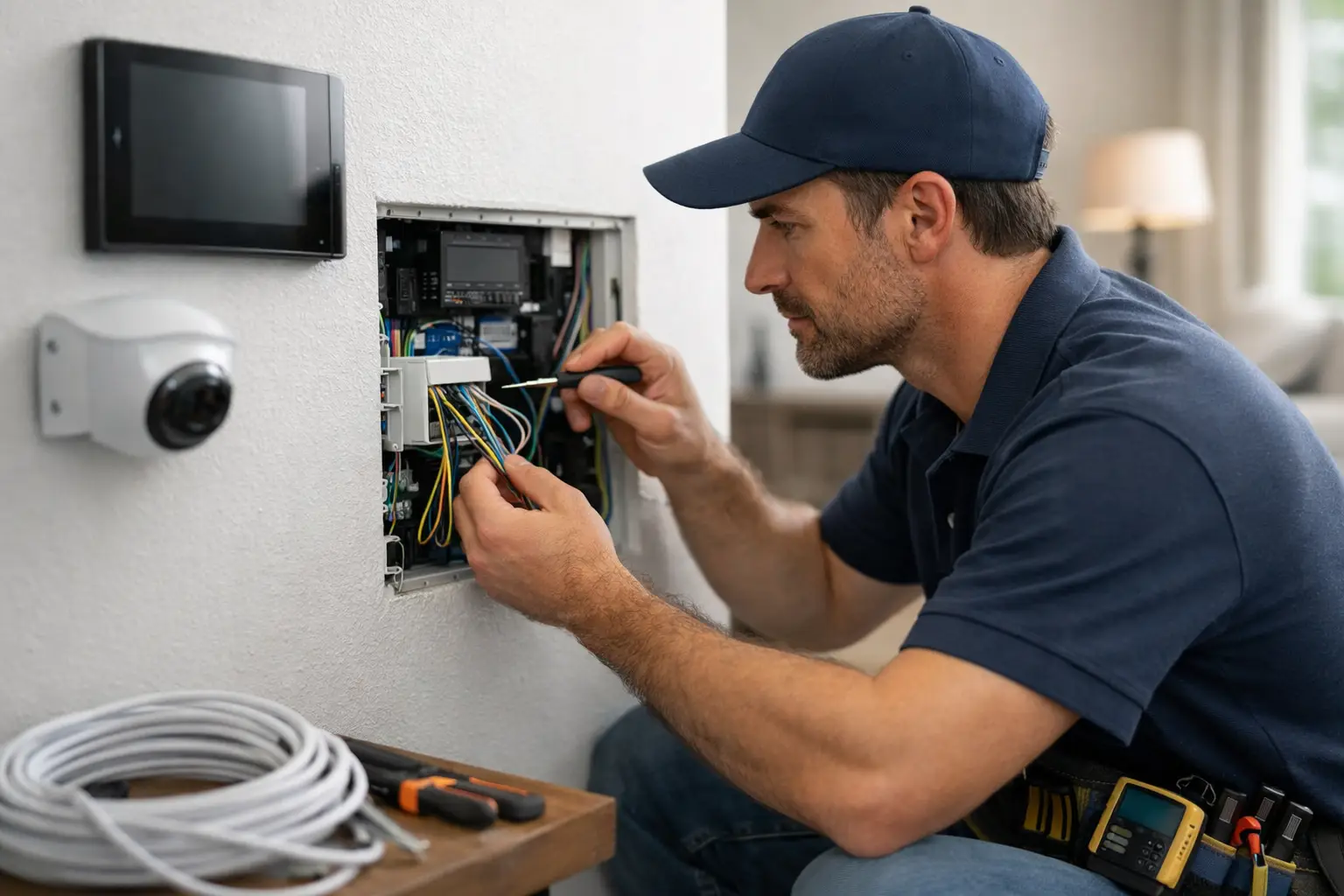

A smart speaker that drops offline, a video doorbell with weak power, lighting scenes that work one day and fail the next – most smart home problems do not start with the device. They start behind the wall. Hiring a smart home wiring electrician early can save you from patchwork fixes, overloaded circuits, and expensive rework after the drywall is up.
Smart home upgrades look simple from the outside. A thermostat, a few switches, cameras, maybe motorized shades. But once those systems need reliable power, dedicated circuits, low-voltage planning, and clean integration with your existing electrical service, the job moves well beyond DIY territory. That is where a licensed electrician makes the difference.
What a smart home wiring electrician actually does
A smart home wiring electrician handles the electrical backbone that allows connected devices and automation systems to work safely and consistently. That can include new wiring during construction, retrofitting an older home, adding circuits for panels and hubs, installing smart switches and dimmers, preparing for security systems, and making sure everything meets code.
This is not just about putting in gadgets. It is about planning how your lighting, outlets, networking equipment, surveillance devices, and control systems will be powered. In many homes, the challenge is not whether a device can be installed. The real question is whether the home is wired in a way that supports that device long term.
For example, many smart switches require a neutral wire. Many older homes do not have one in every switch box. Some cameras and doorbells need more stable power than the existing setup can provide. A homeowner may buy quality products and still end up frustrated if the wiring was never designed for smart controls.
Why proper smart home wiring matters
The biggest benefit of proper wiring is reliability. People invest in smart home features for convenience, security, and energy savings. None of that matters if lights flicker, devices disconnect, or breakers trip when multiple systems run at once.
Safety matters just as much. Smart home additions often increase the number of connected loads, transformers, and powered devices in a home. If those additions are made without evaluating panel capacity, grounding, box fill, and circuit design, you can create hidden electrical issues that do not show up right away.
There is also the issue of future flexibility. A well-planned smart home wiring project leaves room for expansion. Maybe you only want smart lighting today, but next year you may add landscape lighting, EV charging, cameras, or whole-home automation. Wiring with that growth in mind usually costs less than opening walls twice.
Smart home wiring for new construction vs. remodels
New construction gives you the most options. Walls are open, access is easy, and it is much more practical to run wiring where it needs to go. If you are building a custom home or doing a major renovation, this is the time to think through lighting control, dedicated equipment locations, exterior devices, low-voltage pathways, and panel capacity.
In a remodel, the work becomes more selective. A good electrician looks at what can be added with minimal disruption and what requires a larger upgrade. Sometimes a retrofit is straightforward, especially when attics, crawlspaces, or unfinished areas provide access. In other cases, a homeowner may need to choose between limited smart features now or more invasive work for a cleaner result.
That is why upfront planning matters. The right answer depends on the home, the budget, and how far you want the system to go.
Common smart home features that need electrical planning
Many smart devices are sold as plug-and-play, but several categories deserve professional electrical review.
Smart lighting is one of the most common. Dimmers, scene controls, occupancy-based lighting, and exterior automation can all improve convenience and efficiency. But these systems often need compatible loads, proper switch leg wiring, and careful circuit organization.
Security devices are another major category. Doorbell cameras, floodlight cameras, hardwired alarm components, electric strikes, and gate controls all depend on consistent power. A weak or improvised setup may work for a while, then fail when temperatures rise or usage increases.
Motorized shades, whole-home audio equipment, smart thermostats, and networking enclosures also deserve attention. These systems are often added in layers, and one poorly planned installation can affect the performance of the others.
Signs you should call a smart home wiring electrician
If you are still in the shopping phase, that is actually a good time to call. An electrician can tell you whether your current wiring supports the devices you want and whether any upgrades should happen before installation.
You should also bring in a professional if you have an older panel, missing neutral wires, frequent breaker issues, unreliable switches, or plans to combine several smart systems in one property. Commercial tenant improvements and mixed-use spaces also benefit from early electrical coordination, especially when lighting controls, occupancy sensors, and security systems need to work together.
Another clear sign is when multiple contractors are involved. If you have a builder, AV installer, low-voltage contractor, or property manager all working on the same project, the electrical scope should not be left vague. Clear responsibility avoids delays and finger-pointing later.
What to expect from a professional installation
A quality smart home wiring job starts with questions, not assumptions. A qualified electrician should ask how you use the space, what devices you plan to add now, what you may add later, and whether the project is focused on convenience, security, energy savings, resale value, or all of the above.
From there, the work usually includes evaluating the panel, checking existing circuits, identifying code or safety issues, and creating a wiring plan that matches the home and the budget. Some homes need only a few targeted updates. Others need service changes, dedicated circuits, or correction of previous work before smart features are added.
The best installs also account for access, finish quality, and long-term serviceability. That means clean workmanship, labeled circuits where appropriate, and no shortcuts hidden behind trim or insulation. In Las Vegas, where homeowners and property managers often want fast turnaround without sacrificing reliability, this part matters more than people think.
Cost depends on more than the devices
One of the biggest misconceptions is that smart home wiring cost is based only on how many devices you install. In reality, the price is shaped by the condition of the existing electrical system, the layout of the home, wall access, panel capacity, and the level of integration you want.
A simple smart switch replacement in a newer home is very different from rewiring multiple locations in an older property with limited access and no neutral conductors. The same goes for outdoor systems, detached structures, and custom homes where owners want more than basic app control.
That is why honest pricing starts with a real assessment. A contractor who gives a quick number without looking at the electrical conditions may be underestimating the work or leaving out important details.
Choosing the right electrician for the job
Not every electrician handles smart home work with the same level of experience. You want someone who understands both traditional electrical infrastructure and the practical demands of modern connected systems.
Look for a licensed and insured contractor who has experience with new installs, upgrades, troubleshooting, and corrective work. Ask whether they work on both residential and commercial properties if your needs extend beyond a single home. It also helps to choose a company that can explain the work clearly, give straightforward recommendations, and tell you when a simpler solution is the better value.
That practical approach is what many clients are really paying for. At RS Electric LLC, smart home wiring is treated as part of the overall electrical health of the property, not as a standalone gadget install. That means planning for safety, performance, and the next upgrade before it becomes a problem.
Smart home wiring electrician questions worth asking
Before work begins, ask how your existing system will be evaluated, whether your panel can support future expansion, and what limitations might affect installation. If you are comparing bids, ask what is included in the wiring scope and whether troubleshooting or corrections to existing electrical issues are part of the quote.
You should also ask how the work will affect finished walls, whether permits are needed, and what kind of testing will be done before the job is wrapped up. Straight answers up front usually mean fewer surprises later.
A smart home should make life easier, not create a chain of small electrical headaches that keep coming back. When the wiring is done right, the technology feels simple because the infrastructure is solid. That is the part worth getting right the first time.
Need a licensed electrician in Las Vegas?
RS Electric LLC handles electrical troubleshooting and repair for homes and businesses across Las Vegas, Henderson, North Las Vegas and Summerlin. Licensed, bonded & insured (NV C-2 #0078370), certified MBE, 4.9★ on Google. Se habla español.