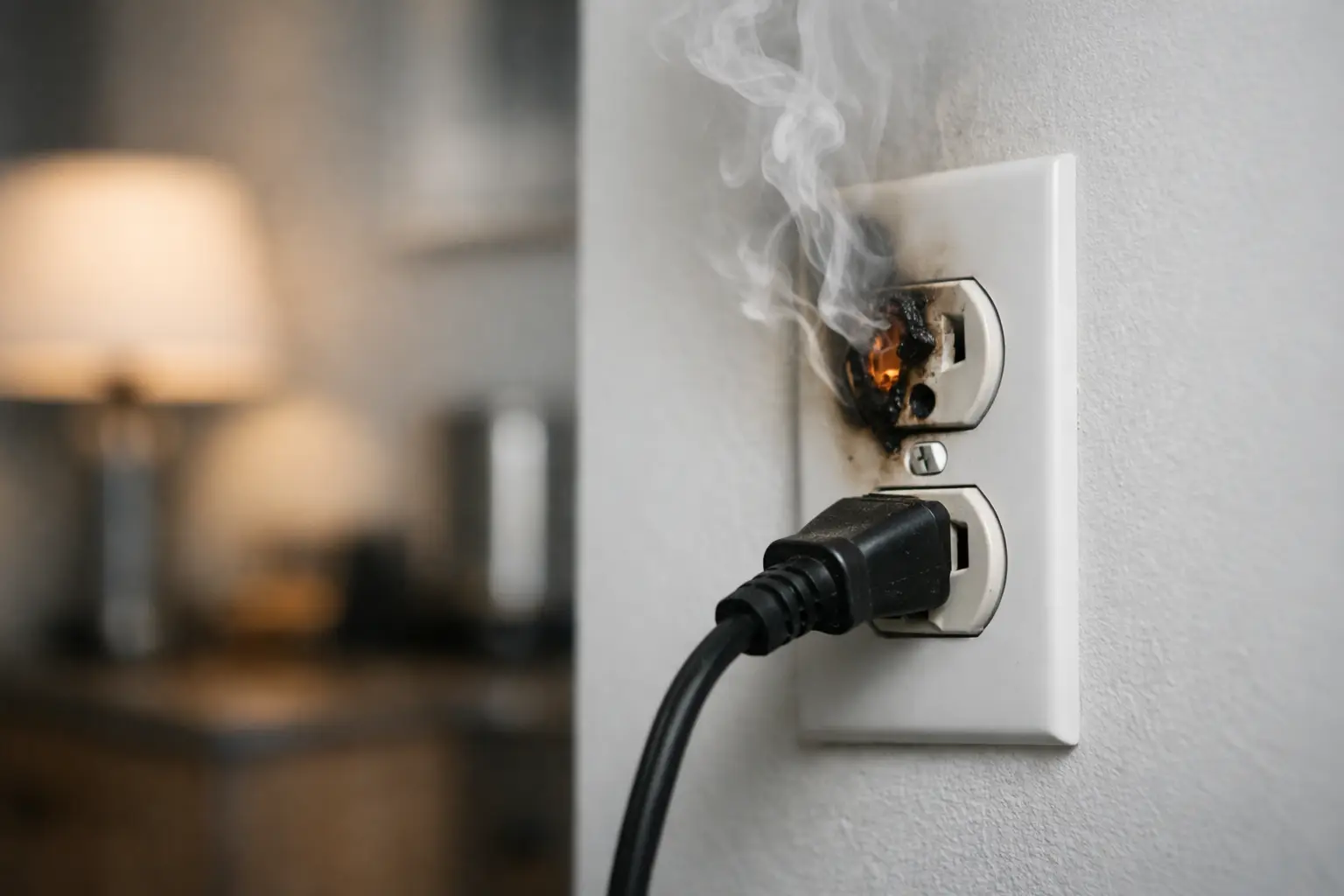

You plug in a phone charger, walk past the wall, and catch a sharp odor that smells like hot plastic or scorched dust. If you are wondering what causes burning outlet smell, treat it as a warning sign, not a minor annoyance. An outlet should never smell like it is overheating, and waiting too long can turn a repair into a much more serious electrical hazard.
In homes and commercial spaces alike, that smell usually points to heat where heat does not belong. Sometimes the issue is limited to a damaged receptacle. Other times it is deeper in the wiring, the breaker, or the load being placed on the circuit. The right response is fast, calm, and safety-first.
What causes burning outlet smell in the first place?
A burning smell from an outlet almost always means one thing: electrical components are getting too hot. That heat can come from loose wire connections, worn contacts inside the receptacle, overloaded circuits, damaged insulation, arcing, or a plug-in device pulling more power than the outlet can handle safely.
Dust can sometimes create a brief odor when a heater or unused device is first powered on, but an outlet itself should not produce a persistent burning smell. If the odor is coming from the outlet cover, the plug, or the wall around it, there is likely an active problem that needs attention.
The smell can vary. Some people describe it as burning plastic. Others say it smells fishy, smoky, or like something metallic getting hot. The exact odor depends on what material is overheating, but the takeaway is the same: electricity is generating heat at a failure point.
The most common reasons an outlet smells like it is burning
Loose wiring behind the outlet
One of the most common causes is a loose connection at the outlet terminals or wire splice. Electricity needs a solid path. When a connection loosens, resistance increases and heat builds up. That heat can char insulation, damage the receptacle, and create arcing.
This is especially common in older outlets, poorly installed devices, or locations where plugs get used heavily and the receptacle has seen years of wear. A loose wire may not trip the breaker right away, which is why people sometimes notice the smell before they notice any loss of power.
Overloaded outlet or circuit
Another common issue is simple overload. Space heaters, microwaves, hair tools, air fryers, window AC units, and commercial equipment can pull significant current. If several high-demand devices are on the same circuit, the wiring and outlet may overheat.
This problem gets worse when extension cords, power strips, and adapter plugs are stacked together. The outlet may not be designed for that kind of demand, especially in older buildings. In Las Vegas properties where summer cooling loads are already high, overloaded circuits are not unusual.
Damaged receptacle contacts
Inside every outlet are metal contacts that grip the plug blades. Over time, those contacts can wear out, loosen, or corrode. When that happens, the plug may not sit tightly. A poor connection creates heat, and heat creates more damage.
If a plug feels loose, slips out easily, or only works when moved a certain way, the receptacle may be failing. That kind of wear is not just inconvenient. It is a real fire risk.
Arcing inside the outlet box
Arcing happens when electricity jumps through air between conductors instead of flowing cleanly through the intended path. It can happen because of cracked insulation, loose terminals, broken wires, or deteriorated devices. Arcing produces intense heat and often leaves a distinct burnt smell.
Sometimes arcing also causes crackling sounds, flickering power, or visible discoloration around the outlet. Even if the smell comes and goes, arcing should be treated as urgent.
Faulty plug-in appliances or chargers
The outlet is not always the true source. A damaged charger, lamp cord, printer, appliance, or power brick can overheat at the plug connection and make it seem like the outlet is the problem. Cheap or worn-out charging blocks are a frequent culprit.
If the smell appears only when one specific item is plugged in, stop using that device immediately. The outlet may still need inspection, because overheating at the plug can damage the receptacle too.
Aging wiring or hidden damage
In some cases, the outlet is just where the warning shows up, but the real issue is in the branch wiring behind the wall. Older insulation can become brittle. Rodents can damage wires. Past handyman work can leave unsafe splices or undersized wiring. Remodeling work can also pinch or stress cables in ways that are not obvious until a problem develops.
That is why a burning smell should not be reduced to a quick outlet swap without proper diagnosis. The visible device may be only part of the issue.
Signs the problem is getting more serious
A smell alone is enough reason to stop and investigate, but some warning signs raise the level of concern fast. Warmth at the outlet cover is one. Discoloration, browning, melted plastic, or soot marks are another. If a breaker trips repeatedly, lights flicker on the same circuit, or you hear buzzing, crackling, or popping, there may be active overheating or arcing.
Sparking when plugging something in can happen occasionally in small amounts, but repeated or large sparks are not normal. The same goes for outlets that no longer hold plugs firmly, switches that feel hot, or a smell that lingers after the device is unplugged.
If you see smoke, shut off power at the breaker if it is safe to do so and call for help right away.
What to do right away if you smell burning from an outlet
First, unplug anything connected to that outlet if you can do it safely. Do not keep testing it or plugging in something else to compare. If the outlet is hot, scorched, or making noise, leave it alone.
Next, turn off the breaker that controls that outlet if you know which one it is. If you are unsure, it is better to get professional help than to start guessing while an overheated device remains energized.
Do not spray anything into the outlet, and do not try to mask the smell and move on. Also avoid using nearby outlets on the same wall or circuit until the issue is checked. Electrical problems often extend beyond the exact device that first caught your attention.
When a simple fix is not really simple
People sometimes assume a burnt-smelling outlet just needs replacement. Sometimes that is true. If the receptacle is worn out and the wiring is intact, replacing the outlet may solve the issue.
But the real answer depends on what caused the heat. If the connection failed because the circuit is overloaded, a new outlet alone will not fix the problem. If the wire insulation has been damaged, the repair may require cutting back conductors, remaking splices, replacing cable, or evaluating the breaker and panel. If the property has multiple aging devices showing similar wear, the smarter move may be a broader safety update instead of one isolated repair.
That is where experience matters. A licensed electrician should look for the cause, not just the symptom.
What causes burning outlet smell in older homes and commercial spaces?
Older homes often have outlets that have simply reached the end of their service life. Contacts loosen, devices crack, and connections oxidize over time. In some properties, previous repairs were done quickly instead of correctly, leaving backstabbed wiring, mixed device quality, or overloaded circuits from years of added appliances.
Commercial spaces can have a different pattern. Tenant improvements, office equipment, kitchen appliances, display lighting, and equipment changes often increase electrical demand over time. A circuit that was fine for one use may be overloaded after the space is reconfigured.
In both settings, the lesson is the same: a burning smell is usually a symptom of heat caused by stress, wear, or poor connection quality.
Why fast service matters
Electrical issues rarely improve on their own. Heat damages insulation, contacts, and devices, which increases resistance and leads to even more heat. What starts as a faint odor can become a dead outlet, damaged wiring, a tripped breaker, or in the worst case, a fire inside the wall.
Prompt diagnosis usually means a smaller repair, less downtime, and less risk to the property. For homeowners, that can mean protecting your family and avoiding hidden wall damage. For business owners and property managers, it can mean preventing interruptions, liability, and expensive emergency repairs.
At RS Electric LLC, this is exactly the kind of issue that calls for clear troubleshooting, honest recommendations, and a repair done the right way the first time.
The right mindset when you notice the smell
If you have been asking what causes burning outlet smell, the safest answer is this: something is overheating, and it should be checked before you keep using that circuit. It may be a worn outlet, a bad connection, a failing device, or a larger wiring problem. The only thing it is not is normal.
A faint smell from an outlet is easy to ignore, especially when power still works. That is often when the risk is highest, because the system is still energized while damage continues out of sight. The better move is to stop using it, shut off power if possible, and have a qualified electrician pinpoint the source.
When electricity gives you a warning, listening early is usually the most affordable part of the repair.
Need a licensed electrician in Las Vegas?
RS Electric LLC handles electrical troubleshooting and repair for homes and businesses across Las Vegas, Henderson, North Las Vegas and Summerlin. Licensed, bonded & insured (NV C-2 #0078370), certified MBE, 4.9★ on Google. Se habla español.