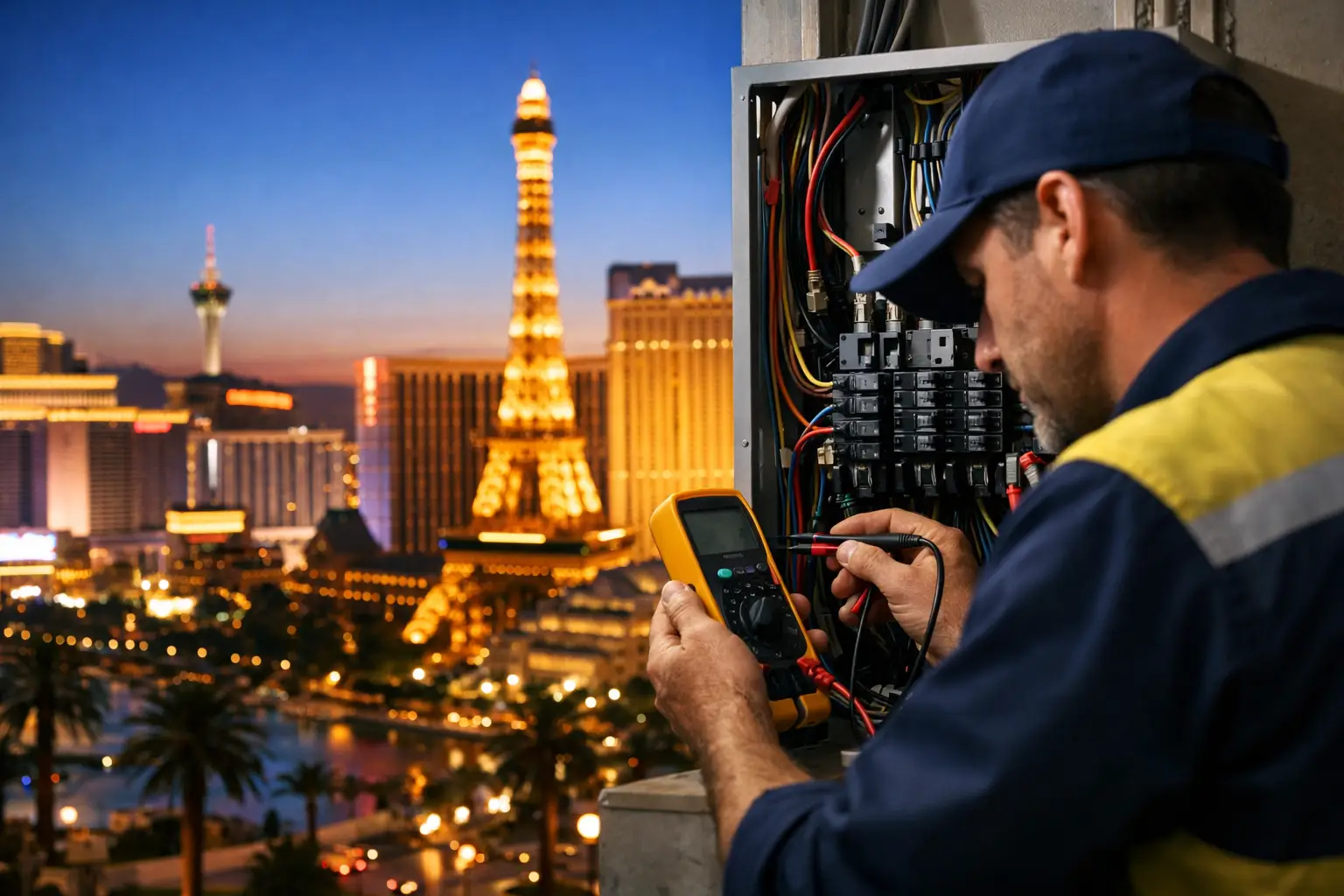

A breaker that trips once may feel like a small annoyance. A breaker that keeps tripping in the Las Vegas heat, takes out a room, or shuts down part of a business is a different story. Electrical troubleshooting Las Vegas property owners need is not about guessing, resetting, and hoping for the best. It is about finding the actual cause, fixing it safely, and making sure the problem does not come back.
In homes and commercial spaces across the valley, electrical issues often start small. Lights flicker. Outlets stop working. A panel buzzes. A switch gets warm. Then the inconvenience turns into a safety concern. Good troubleshooting saves time, prevents repeat service calls, and protects the systems your property depends on every day.
Why electrical problems should be diagnosed, not guessed at
A lot of electrical issues have more than one possible cause. Flickering lights might point to a loose connection, an overloaded circuit, a failing fixture, or a panel issue. An outlet that stopped working could be tied to a tripped GFCI, damaged wiring, a failed receptacle, or a deeper circuit fault. The symptom is visible. The cause often is not.
That is why professional troubleshooting matters. A licensed electrician does not just replace the part that seems most likely to be bad. The job is to trace the problem through the circuit, test what is happening, verify where the fault starts, and repair it correctly. That approach is safer, more efficient, and usually less expensive than replacing multiple components one by one until something works.
For owners and managers, this also reduces downtime. In a house, that may mean getting a kitchen circuit, garage outlet, or HVAC disconnect back in service without delay. In a commercial setting, it can mean keeping tenant improvements on track, restoring lighting, or solving a recurring power issue before it affects operations.
Common calls for electrical troubleshooting in Las Vegas
Las Vegas properties deal with a mix of aging infrastructure, renovations, added electrical demand, and intense seasonal use. That creates patterns electricians see often.
One of the most common calls is for breakers that trip repeatedly. Sometimes the issue is simple overload. Other times it points to a short, ground fault, damaged wiring, or a breaker that is no longer performing the way it should. Resetting the breaker may restore power for a moment, but it does not answer why it tripped.
Another frequent problem is partial power loss. A room may go dark while nearby outlets still work, or one side of a property may lose power while the rest stays on. This kind of issue can come from loose connections, failed devices, damaged conductors, or service equipment concerns. It takes proper testing to narrow it down.
Flickering lights are also common, especially in properties with older wiring, recent fixture upgrades, or circuits carrying more demand than they were designed for. Sometimes the fix is at the fixture. Sometimes it reaches back to the panel or service connection. The same is true for dead outlets, nonworking switches, and circuits that seem unreliable only at certain times of day.
Commercial customers often call about lighting failures, tenant space wiring issues, dedicated circuit problems, and equipment that will not run consistently. In these cases, speed matters, but so does accuracy. A quick patch that does not solve the root issue usually becomes a more expensive interruption later.
Electrical troubleshooting Las Vegas homes often need after upgrades
Many electrical problems appear right after a remodel, appliance replacement, or system upgrade. A new EV charger, smart home feature, outdoor lighting addition, or kitchen appliance package changes how a property uses power. If the existing system was already near capacity, adding more load can expose weaknesses that were hidden before.
This does not always mean the upgrade was a mistake. It means the electrical system needs to be evaluated as a whole. The panel size, circuit layout, wire condition, and grounding all matter. A professional diagnosis can determine whether the fix is as minor as a dedicated circuit or as significant as a service change.
Custom homes and renovated properties especially benefit from this kind of careful review. Modern devices, lighting controls, and convenience upgrades bring real value, but they also require planning and clean execution. When something is off, troubleshooting should connect the dots between the new work and the original system instead of treating them as separate issues.
Signs you should call a licensed electrician right away
Some problems should not wait. If you notice a burning smell, a hot switch or outlet, visible sparking, buzzing from the panel, repeated breaker trips, or power loss that affects critical equipment, it is time to bring in a professional. The same goes for signs of damaged wiring, water exposure near electrical components, or outlets that suddenly stop working after a storm or repair project.
There are also cases where the issue feels minor but keeps returning. That matters. A nuisance problem that repeats is often an early warning. It may not fail the same way every time, and that can make it tempting to ignore. But intermittent faults are exactly the kind of problems that deserve a thorough inspection before they turn into a larger repair.
For property managers and business owners, recurring electrical complaints from tenants or staff should be taken seriously even when the issue seems inconsistent. If one office light flickers daily or one retail outlet trips every week, the problem is not resolved just because the power comes back on.
What a professional troubleshooting visit should look like
Good troubleshooting is methodical. It starts with listening. When did the problem begin? What was running at the time? Is it constant or intermittent? Did any remodel, storm event, or equipment change happen recently? These details help narrow the possibilities before testing begins.
From there, the electrician checks the affected devices, circuit path, panel condition, and related connections. Voltage readings, continuity checks, load behavior, and visual inspection all help identify whether the issue is local, circuit-wide, or service-related. The goal is not only to restore power but to explain why the problem happened.
That explanation matters. Customers should know whether the repair addresses a worn receptacle, loose termination, damaged wire, overloaded branch circuit, failing breaker, or outdated panel condition. Honest communication builds trust and helps owners make informed decisions about what needs immediate repair and what may be worth planning for next.
At RS Electric LLC, that practical, transparent approach is part of the service. Customers want clear answers, reasonable pricing, and repair work that holds up. They do not want confusion, vague recommendations, or avoidable return visits.
The value of fixing the root cause
There is a big difference between restoring power and solving a problem. If a breaker trips because too many high-demand devices are sharing one circuit, resetting it is temporary. If a wire connection is loose inside a device box, replacing the faceplate changes nothing. If an older panel is struggling with current demand, repeated small repairs may only delay a larger correction.
That does not mean every problem calls for a major project. Sometimes the right fix is straightforward. A failed outlet, worn switch, damaged light fixture, or bad breaker can often be replaced efficiently. Other times, the correct solution involves rewiring part of a circuit, adding dedicated power, correcting previous work, or upgrading service equipment. It depends on what testing shows.
The key is accuracy. Root-cause troubleshooting protects your budget because you are paying for a real solution, not a series of guesses.
Choosing electrical troubleshooting Las Vegas property owners can rely on
When you hire for troubleshooting, you are not just hiring someone to show up with tools. You are hiring judgment. The right contractor should be licensed, insured, experienced with both repairs and upgrades, and able to work on residential and commercial systems with the same level of care.
Responsiveness matters too. Electrical problems interrupt daily life, tenant operations, and project schedules. You need a team that respects your time, communicates clearly, and treats safety as nonnegotiable. Fair pricing matters, but so does workmanship. The lowest number on paper is not a value if the issue comes back a week later.
Las Vegas customers tend to remember two things: whether the electrician solved the problem, and whether the process felt honest. That is why technical skill and professionalism have to go together. A reliable contractor should make the path forward clear, whether the repair is simple or more involved.
If your lights are flickering, your breakers keep tripping, or part of your property is not getting the power it should, trust the warning signs. A careful diagnosis today can prevent a bigger disruption tomorrow, and give you the confidence that your electrical system is ready for the way you actually live and work.
Need a licensed electrician in Las Vegas?
RS Electric LLC handles electrical troubleshooting and repair for homes and businesses across Las Vegas, Henderson, North Las Vegas and Summerlin. Licensed, bonded & insured (NV C-2 #0078370), certified MBE, 4.9★ on Google. Se habla español.