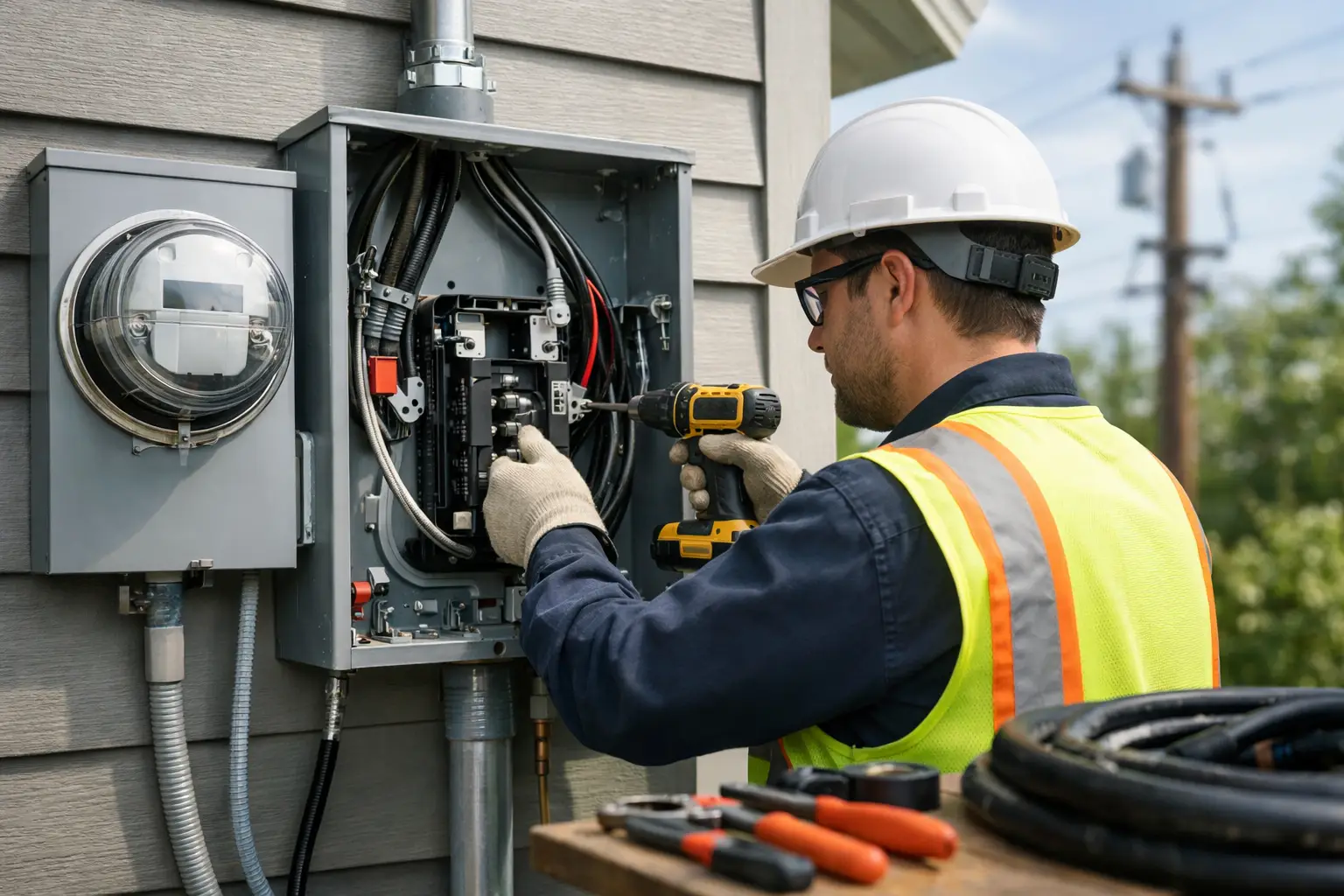

If your lights dim when the AC kicks on, your panel feels crowded, or you’re planning a remodel that adds major electrical load, it’s probably time to talk to a service entrance upgrade electrician. This is not cosmetic electrical work. A service entrance upgrade affects how power gets from the utility to your building, how safely that power is distributed, and whether your system can handle modern demand without constant nuisance trips or hidden risk.
In Las Vegas, that matters more than many property owners realize. Between high cooling loads, home additions, EV chargers, upgraded kitchen appliances, and commercial tenant build-outs, older electrical services can get pushed past what they were designed to handle. When that happens, the right upgrade is not about guessing. It’s about evaluating the full load, the condition of the existing equipment, and the code requirements that apply to the property.
What a service entrance upgrade electrician actually does
A service entrance upgrade electrician handles more than a panel swap. In many cases, the scope includes the service mast or riser, meter socket, service conductors, grounding and bonding, main disconnect, panel capacity, and coordination with the power utility. If any one of those parts is outdated, undersized, or damaged, the whole service may need correction.
That is why a true service upgrade starts with diagnosis. A licensed electrician looks at the amperage of the existing service, available space in the panel, signs of overheating, corrosion, improper terminations, and whether the current setup matches the load the property actually uses today. A 100-amp service that worked years ago may not be enough for a house with a large HVAC system, electric range, pool equipment, and an EV charger.
For commercial properties, the conversation can be even more specific. Tenant improvements often change the electrical load dramatically. New lighting layouts, office equipment, refrigeration, kitchen equipment, or specialized machinery can push a service beyond its safe capacity. In those cases, upgrading early helps prevent delays later in the project.
Signs you may need a service entrance upgrade
Some properties clearly need the work. Others show warning signs for months or years before anyone addresses them. Frequent breaker tripping is one of the most common clues, but it is not the only one. Flickering or dimming lights, warm breakers or panel components, outdated fuse boxes, limited panel space, and visible wear around the meter or service equipment can all point to a service that is no longer adequate.
You may also need an upgrade if you are planning to add new electrical demand. That includes a home addition, hot tub, workshop equipment, electric water heater, new HVAC equipment, or an EV charger. Even when the existing system still works, future load can make the current service impractical.
There is also the insurance and safety side of the decision. Older service equipment, especially if it has known reliability issues or visible deterioration, can become a liability. A professional inspection can tell you whether you need a full upgrade now or whether a more limited correction will solve the issue.
Service entrance upgrade electrician for homes and businesses
Residential and commercial upgrades follow the same principles, but the planning is different. In a home, the main question is usually whether the service can support the way the family actually lives. Today’s homes run harder than older homes did. More electronics, larger HVAC systems, electric cooking, garage equipment, and vehicle charging add up quickly.
In a commercial setting, electrical service affects operations, scheduling, and tenant obligations. If a space needs power for specialized equipment or a new layout, the service has to match the build-out. Property managers and business owners usually want the same thing: safe capacity, clear pricing, reliable scheduling, and minimal disruption.
That is where experience matters. An upgrade has to be planned with real-world use in mind, not just the bare minimum on paper. A good electrician looks at present demand, likely future needs, code requirements, and the practical timeline for getting the work completed.
What the upgrade process usually looks like
A service entrance upgrade begins with a site visit and load evaluation. The electrician reviews the existing setup, asks about planned additions or remodels, and checks whether the service size is appropriate. If the property needs an upgrade, the next steps usually include scope definition, pricing, permit planning, and coordination with the utility if shutoff or meter work is required.
Once the work is approved, the installation itself may involve replacing the panel, meter base, service conductors, grounding system, or other related components. Not every project includes every part. It depends on the age of the equipment, code compliance, and the condition of the current installation.
Power downtime is often part of the job, but a well-organized contractor works to keep that downtime controlled and predictable. That matters for homeowners, and it matters even more for occupied commercial spaces. Clear communication is a big part of doing the job right.
After installation, the work is inspected as required, tested, and labeled properly. The goal is not just to energize the system again. The goal is to leave the property with a safer, cleaner, code-compliant service that is ready for actual use.
How much does a service entrance upgrade cost?
This is the question most people ask first, and the honest answer is that it depends on the scope. A straightforward upgrade is different from a project that involves relocating equipment, correcting old code violations, replacing damaged conductors, or upgrading grounding. Accessibility, utility coordination, permit requirements, and the age of the building all affect pricing.
For that reason, a low quote is not always a better quote. If a price leaves out key corrections or utility coordination, the final cost can rise later. A clear estimate should explain what is being replaced, what is staying, and what factors could affect the timeline or final price.
Property owners usually benefit most from transparent pricing and practical recommendations. Sometimes a full service upgrade is the right move. Sometimes the issue is more limited. The important part is getting an honest assessment instead of paying for a guess.
How to choose the right service entrance upgrade electrician
This is specialized work, so credentials matter. You want a licensed and insured electrical contractor with real experience in service changes, troubleshooting, upgrades, and permit-based work. Ask whether the company handles both the field work and the coordination required with local inspectors and the utility.
It also helps to choose a contractor who communicates plainly. Electrical work can get technical fast, but the estimate and explanation should still make sense. You should understand what problem is being solved, why the upgrade is recommended, and what results to expect when the job is done.
Local experience is another advantage. In Las Vegas, service demand, building conditions, and scheduling realities can differ from other markets. A contractor who works in the area regularly is more likely to plan the job efficiently and catch issues before they turn into delays.
At RS Electric LLC, that practical approach is central to how the work gets done. The focus is simple: diagnose correctly, recommend only what is needed, price the work fairly, and complete it with the professionalism people expect from a licensed local electrical contractor.
When to upgrade now and when you may be able to wait
Not every property needs an immediate service upgrade. If the system is safe, code-compliant, and sized appropriately for the current and planned load, you may not need major work yet. On the other hand, if the service is outdated, overloaded, damaged, or standing in the way of your project, waiting usually makes the problem more expensive.
The best time to address a service entrance issue is before it causes repeated outages, project delays, or safety concerns. If you are already planning a remodel, adding equipment, or preparing a commercial space for a new tenant, that is the right moment to have the service evaluated.
A good electrician will tell you if the upgrade is necessary now, advisable soon, or not needed at all. That kind of honesty saves money and builds trust, which is exactly what property owners should expect when they hire electrical help.
If your property is showing signs of strain or you are planning work that demands more power, getting a professional evaluation now can prevent bigger problems later. The right service entrance upgrade is not just about capacity. It is about making your electrical system dependable, safe, and ready for what comes next.
Need a licensed electrician in Las Vegas?
RS Electric LLC handles panel upgrades for homes and businesses across Las Vegas, Henderson, North Las Vegas and Summerlin. Licensed, bonded & insured (NV C-2 #0078370), certified MBE, 4.9★ on Google. Se habla español.