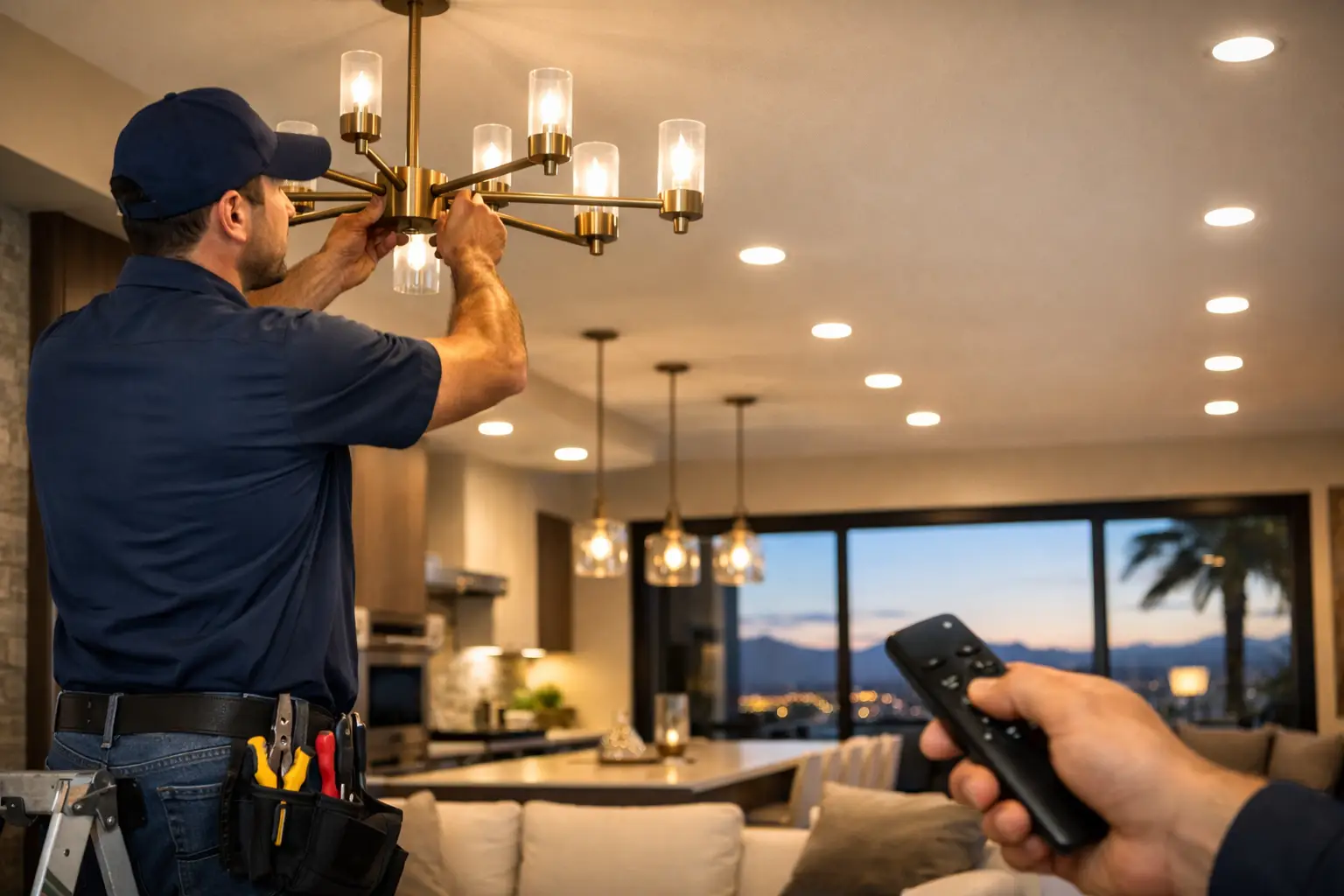

A dim kitchen, a shadowy office, or a living room with one harsh ceiling fixture can make an otherwise good space feel unfinished. That is why interior lighting installation Las Vegas property owners choose should never be treated like a minor add-on. The right lighting changes how a room works, how it feels, and how safely your electrical system supports everyday use.
In Las Vegas, lighting projects often happen during remodels, tenant improvements, custom home builds, and overdue upgrades in older properties. Some clients want a cleaner modern look. Others need better task lighting, energy savings, or corrected wiring after years of piecemeal changes. Whatever the goal, good results come from more than picking attractive fixtures. They come from proper planning, code-aware installation, and a contractor who understands how lighting fits into the entire electrical system.
Why interior lighting matters more than most people expect
Lighting affects comfort, function, and appearance all at once. In a kitchen, poor placement creates shadows on counters where you prep food. In a retail space, uneven brightness can make the store feel dated and uninviting. In a home office, glare and underlighting can wear on you faster than most people realize.
There is also the issue of electrical performance. A lighting upgrade is often the moment when hidden problems show up – overloaded circuits, outdated switches, loose connections, incompatible dimmers, or wiring that was fine years ago but does not match current expectations. A professional installation solves for the finished look, but it should also solve for reliability behind the walls.
That is especially important for property owners trying to avoid callbacks, disruptions, or expensive corrections later. A fixture may look great on day one, but if it flickers, trips a breaker, hums with a dimmer, or was mounted without the right support, the project was not really done right.
What goes into quality interior lighting installation in Las Vegas
A strong lighting project starts with the room, not the fixture. Every space has different demands based on layout, ceiling height, natural light, and how people actually use it. A hallway has different needs than a restaurant dining area. A custom home living room needs a different lighting plan than a commercial suite with workstations and conference rooms.
Fixture selection is only part of the job
Recessed cans, pendants, chandeliers, under-cabinet lighting, track lighting, sconces, vanity lights, and LED retrofits all have their place. But choosing the type is just the beginning. The installer also has to account for switch locations, dimming compatibility, circuit capacity, load balancing, mounting conditions, and clean finish work.
This is where experience matters. The wrong fixture in the wrong place can create hot spots, glare, or weak coverage. The wrong dimmer can cause flickering. The wrong installation method can leave visible gaps, crooked alignment, or future maintenance issues.
Layout affects the final result as much as the hardware
Even high-end fixtures can underperform if spacing is off. Recessed lighting set too far apart leaves dark zones. Pendants hung at the wrong height can feel intrusive or ineffective. In bathrooms, side lighting and overhead lighting need to work together or the mirror area becomes frustrating to use.
A contractor who handles interior lighting installation Las Vegas clients rely on should think beyond the electrical connection. The placement has to make sense visually and practically. That is what separates a basic install from a polished one.
Residential projects: balancing style, comfort, and safety
For homeowners, interior lighting is often tied to remodeling goals. Maybe the kitchen needs layered lighting instead of one center fixture. Maybe the primary bathroom needs better vanity lighting. Maybe an older home simply needs updated fixtures and switches that feel current and work properly.
The right plan usually combines ambient lighting for general visibility, task lighting for work areas, and accent lighting for visual depth. Not every room needs all three, but many spaces benefit from some combination. A family room might use recessed lighting for overall coverage, a statement fixture for style, and dimmers for flexibility in the evening.
There are trade-offs. More fixtures can improve coverage, but too many can make a ceiling look busy. Decorative fixtures add personality, but they may not provide enough usable light on their own. Dimmers increase control, but they need to be paired with compatible fixtures and bulbs. A good electrical contractor helps you sort through these choices without overcomplicating the job.
For older homes, upgrades may reveal additional needs. Existing wiring may need correction. Boxes may need replacement or reinforcement. Circuits may need to be evaluated before adding new loads. These are not reasons to avoid the project. They are reasons to work with a licensed, insured professional who can handle the full scope instead of patching around problems.
Commercial lighting: function first, but appearance still matters
For business owners, property managers, and commercial tenants, interior lighting has direct impact on operations. Employees need usable workspaces. Customers notice the atmosphere right away. Poor lighting can make a business feel less professional, less comfortable, and less efficient.
Retail spaces often need bright, even illumination with focused lighting for displays or key merchandise. Offices need a balance that supports productivity without harsh glare. Restaurants and hospitality spaces need more control over mood and visual comfort. In tenant improvement projects, lighting also has to align with the floor plan, schedule, and overall build-out requirements.
Commercial work tends to involve tighter timelines and more coordination with other trades. That is why dependability matters as much as technical skill. Delays in electrical work can affect ceiling closures, finish schedules, inspections, and occupancy plans. A contractor who shows up, communicates clearly, and installs correctly the first time helps keep the entire project moving.
Common signs it is time for a lighting upgrade
Some lighting problems are obvious. Others become normal over time, even when they are costing you convenience or creating avoidable safety concerns. If fixtures flicker, certain rooms feel dim no matter what bulb you use, switches stop working consistently, or your current layout no longer fits the way the space is used, it may be time to update the system.
Outdated fixtures are another common reason to move forward. Older lighting can make a home or commercial interior feel tired, but the issue is not only cosmetic. Older equipment may be less efficient, less reliable, or less compatible with modern controls. If you are already opening walls during a remodel or reworking part of a property, that is often the right time to make the lighting plan better instead of simply replacing like for like.
Why hiring a licensed electrician is the smart move
Lighting work looks simple from the outside. Mount the fixture, connect the wires, turn the power back on. But quality installation is about safety, code compliance, diagnostics, and long-term performance. That matters whether you are replacing a dining room light or building out a full commercial suite.
A licensed electrical contractor can identify issues before they become expensive. That includes incompatible components, weak support for heavier fixtures, improper wiring methods, overloaded circuits, and hidden problems left by previous work. Just as important, professional installation protects the property owner from the risks that come with shortcuts.
Las Vegas clients often want speed, and that is reasonable. But fast should not mean rushed. The best lighting projects move efficiently because the contractor knows what to look for, plans the work clearly, and executes without creating new problems.
What to look for in an interior lighting contractor
Start with the basics: licensing, insurance, and a track record of reliable service. Then look at how the company communicates. Do they explain the scope clearly? Do they offer realistic timelines? Do they talk through options in plain language? That matters, especially if you are comparing a straightforward fixture replacement with a larger upgrade involving new wiring, switch changes, or multiple rooms.
It also helps to work with a contractor who can handle more than one narrow task. Lighting projects sometimes uncover related electrical needs, and it is far easier to have one capable team address them properly than to juggle multiple providers. That full-service approach is one reason property owners across Las Vegas turn to experienced local contractors like RS Electric LLC for both targeted lighting work and broader electrical improvements.
Price matters too, but only when it is attached to real value. A low quote that ignores correction work, uses poor materials, or cuts installation corners usually costs more later. Fair pricing, honest recommendations, and dependable workmanship are a better deal every time.
When interior lighting is done right, the effect is immediate. Rooms feel more open, work gets easier, and the whole property looks more finished. If you are planning an upgrade, a remodel, or a new build, the best next step is simple: choose a contractor who treats lighting as part of the system, not just the fixture on the ceiling.
Need a licensed electrician in Las Vegas?
RS Electric LLC handles electrical troubleshooting and repair for homes and businesses across Las Vegas, Henderson, North Las Vegas and Summerlin. Licensed, bonded & insured (NV C-2 #0078370), certified MBE, 4.9★ on Google. Se habla español.