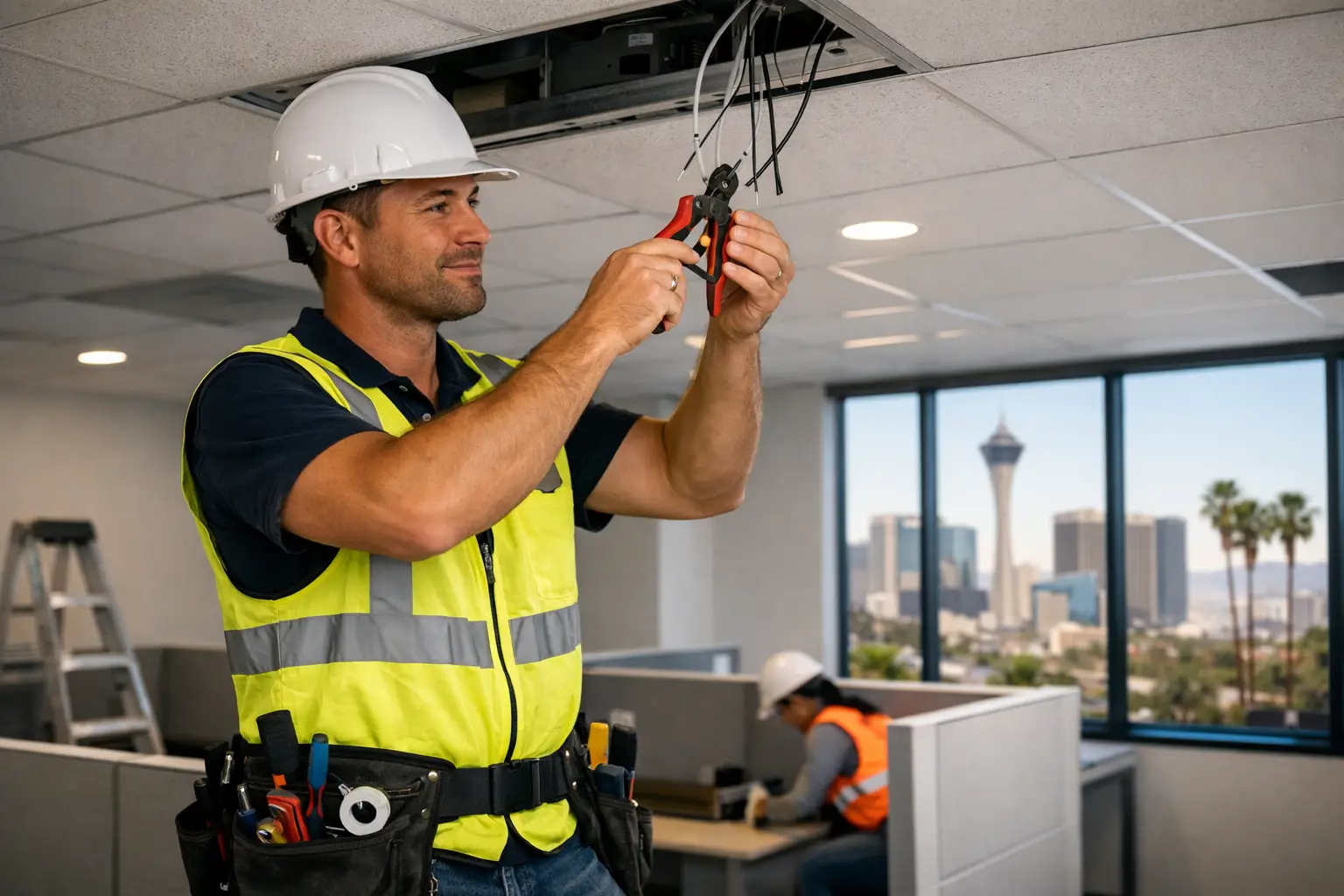

A retail suite that looks ready on paper can still be weeks away from opening if the electrical scope is off. That is why hiring the right tenant improvement electrician Las Vegas business owners and property managers rely on is not a small detail – it is one of the decisions that affects schedule, inspections, safety, and budget from day one.
Tenant improvements move fast, and the electrical portion often carries more weight than expected. Lighting layouts need to match the use of the space. Circuits must support equipment loads. Panels may need upgrades. Exit signs, emergency lighting, dedicated outlets, low-voltage coordination, and code corrections can all surface once walls are opened or plans are finalized. If the electrician is not experienced with build-outs, a simple remodel can turn into rework, inspection delays, or expensive last-minute changes.
What a tenant improvement electrician in Las Vegas actually handles
Tenant improvement work is different from routine electrical service calls. In a TI project, the electrical contractor is helping adapt a commercial space for a new use, a new tenant, or an updated layout. That can mean building from a mostly empty shell, reworking an existing office, or converting a space for retail, restaurant, salon, medical, or mixed-use needs.
In practical terms, the work may include new branch circuits, panel modifications, lighting installation, switch and receptacle placement, code-required upgrades, service changes, troubleshooting existing systems, and coordination with other trades. Sometimes the job is straightforward because the existing infrastructure is in good shape. Other times, the real work starts after uncovering aging wiring, overloaded panels, poor prior modifications, or layouts that no longer fit the new occupancy.
Las Vegas projects also come with their own pace and pressure. Commercial tenants often have firm opening dates, property managers want minimal disruption, and owners need confidence that work will pass inspection without repeated corrections. That is where experience matters. A licensed and insured contractor with a strong service background can spot issues early instead of waiting for them to become change orders.
Why tenant improvement electrical work is rarely one-size-fits-all
No two tenant spaces use power the same way. A small office may need efficient lighting, workstation circuits, data coordination, and conference room flexibility. A restaurant or salon may need multiple dedicated lines, specialty equipment wiring, and careful load planning. A retail build-out may focus on accent lighting, signage power, back-of-house circuits, and code-compliant emergency systems.
This is why the cheapest estimate is not always the lowest final cost. If a bid is based on assumptions rather than field reality, the price can change quickly once the work begins. A more accurate approach starts with understanding the intended use of the space, reviewing existing conditions, and aligning the electrical scope with the construction timeline.
There is also a balance between immediate needs and future flexibility. Some clients want the minimum required to open fast, which can make sense in the right situation. Others want to invest a little more upfront for better lighting control, extra capacity, smart wiring, or cleaner layout planning that supports future growth. Neither option is automatically wrong. It depends on lease terms, business goals, and how long the tenant expects to stay in the space.
What to look for in a tenant improvement electrician Las Vegas property owners can trust
The first requirement is simple: proper licensing, insurance, and a track record with both installation and problem-solving. TI projects are rarely perfect from start to finish. Even well-planned jobs can uncover hidden issues, and that is where technical judgment matters as much as installation skill.
Look for an electrician who communicates clearly about scope, scheduling, and pricing. You should know what is included, what may depend on site conditions, and where potential delays could come from. Honest communication early saves frustration later.
Responsiveness also matters more than many clients realize. Build-outs involve moving parts, and delays from one trade affect the next. An electrical contractor who answers questions, coordinates well, and shows up reliably helps keep the whole project moving. That kind of consistency is often the difference between a smooth opening and a rushed finish.
It also helps to work with a contractor who can do more than install new devices. Tenant improvement jobs often involve troubleshooting old wiring, correcting unsafe prior work, updating lighting, handling service changes, and adapting to revised layouts mid-project. A team with broad field experience can solve those issues without turning every surprise into a major setback.
Common electrical issues that slow down TI projects
One of the most common problems is underestimating the capacity of the existing electrical system. A space may appear usable, but once the load calculations are reviewed, it becomes clear the panel is full, the service is undersized, or the planned equipment needs dedicated circuits that were never budgeted.
Lighting design is another area where projects get delayed. Fixture counts, control locations, emergency lighting, and energy code requirements all need attention. If these details are left too late, the result can be inspection corrections or a space that technically works but does not perform well for customers or staff.
Then there is legacy work. Many commercial spaces have electrical modifications from prior tenants. Some are acceptable. Some are not. Unlabeled circuits, abandoned wiring, crowded panels, and noncompliant installations are common enough that they should be expected, not treated as rare surprises.
Permitting and inspections can also create bottlenecks if the project is not prepared correctly. A strong contractor understands that speed is important, but speed without code compliance usually costs more in the end.
How experienced electrical planning protects your budget
Good planning does not guarantee zero changes, but it does reduce avoidable ones. When the electrician reviews the space carefully, asks the right questions, and coordinates with the build-out plan, the project starts with a realistic scope instead of guesswork.
That benefits owners, tenants, and managers in different ways. Owners protect the value and safety of the property. Tenants get a space that supports operations from the first day of business. Property managers reduce the chance of complaints, repeat visits, and inspection issues.
This is especially important in remodels where existing systems are being reused in part. Reuse can save money, but only if the existing components are safe, compliant, and suitable for the new layout. Otherwise, keeping old infrastructure just to cut initial costs can create downtime and repair expenses later.
A contractor like RS Electric LLC brings value here because tenant improvement work is not treated as isolated installation labor. It is approached as part of the bigger objective: opening a safe, functional, code-compliant space without unnecessary friction.
When fast turnaround matters most
Many TI clients are working against lease start dates, opening deadlines, or phased occupancy schedules. Speed matters, but not the kind that skips planning. The better model is fast response, accurate estimating, and dependable execution.
That means showing up prepared, identifying issues early, and keeping work moving with professionalism. It also means being realistic. Some projects can move quickly because the existing infrastructure is favorable. Others need service upgrades, corrections, or coordination with multiple trades before the electrical scope can finish cleanly. The right contractor will tell you the difference instead of promising a timeline that sounds good but does not hold up on site.
For small business owners especially, this matters a lot. Every extra day before opening can mean lost revenue, added rent pressure, and stress that spreads into every other part of the launch. Reliable electrical work helps remove one of the biggest unknowns.
Choosing a long-term partner, not just a bid
A tenant improvement project may start with one build-out, but it often leads to future needs. Lighting changes, added circuits, troubleshooting, repairs, maintenance, service upgrades, and expansions can all come later. Working with a contractor who is honest, fairly priced, and responsive gives you continuity after the initial project is complete.
That is often the difference between a vendor and a real service partner. A vendor installs what is listed and disappears. A trusted electrical contractor helps you make sound decisions, stands behind the work, and is available when the next need comes up.
If you are planning a commercial remodel, preparing a new lease space, or updating a property for a new tenant, take the time to choose an electrician with real tenant improvement experience in Las Vegas. The right electrical work does more than pass inspection – it gives your space the reliability to support business from the moment the doors open.
A well-built space should not leave you wondering whether the lights, circuits, or panel can keep up. It should let you focus on the work ahead with confidence.
Need a licensed electrician in Las Vegas?
RS Electric LLC handles commercial electrical work for homes and businesses across Las Vegas, Henderson, North Las Vegas and Summerlin. Licensed, bonded & insured (NV C-2 #0078370), certified MBE, 4.9★ on Google. Se habla español.