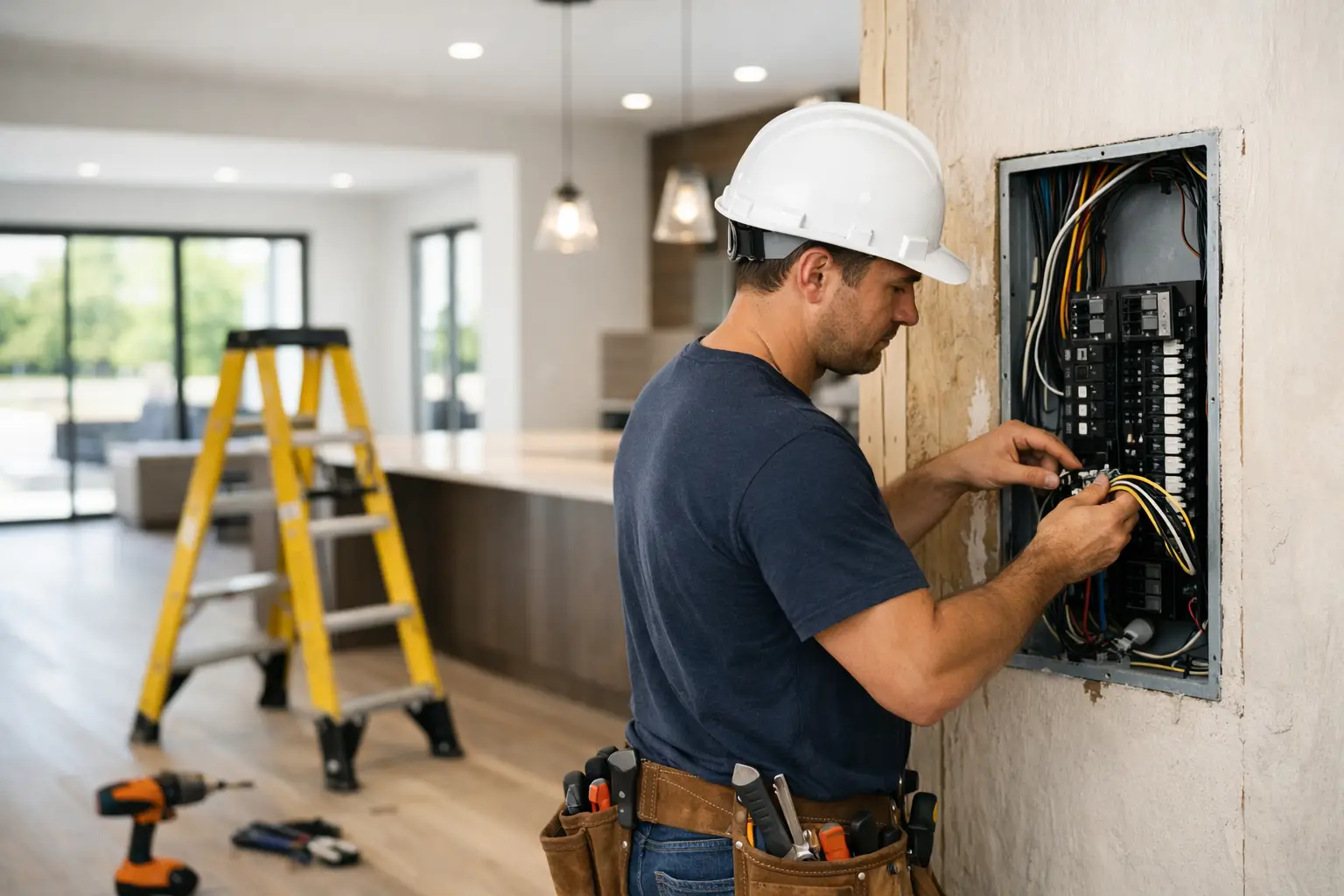

Building a custom home is where electrical decisions stop being background details and start shaping how the house actually lives. The right custom home electrical contractor does more than run wire behind drywall. They help you plan for lighting, appliance loads, smart controls, dedicated circuits, future upgrades, and the small daily conveniences you will notice for years.
In a production home, electrical layouts often follow a standard template. In a custom home, that approach usually falls short. Room use is more specific, finish selections are more intentional, and expectations are higher. A kitchen may need specialty lighting and multiple appliance zones. A home office may require cleaner circuit planning and better outlet placement. An outdoor living area may call for landscape lighting, fans, entertainment wiring, and power in all the right places. Good planning early prevents expensive changes later.
What a custom home electrical contractor actually does
A custom home electrical contractor works with your builder, designer, architect, and sometimes directly with the homeowner to create an electrical system that matches the home instead of forcing the home to fit a generic plan. That starts with load calculations, panel planning, circuit layout, and code compliance. It also includes practical decisions that rarely show up on a mood board, like where switches should be placed, how many receptacles make sense in a room, and whether the service size supports both today’s needs and tomorrow’s additions.
The best contractors also think beyond rough-in. They look at fixture compatibility, dimming performance, exterior exposure, surge protection, and service access. If your project includes automation, electric vehicle charging, a detached structure, or a pool area, those systems need coordination from the beginning. When that coordination is missing, delays and rework tend to follow.
Why electrical planning matters more in a custom home
Electrical work is one of the few systems you use every single day without thinking much about it – until something feels off. A switch is in the wrong place. A hallway is darker than expected. An island has no convenient power. A panel is maxed out sooner than planned. These are not dramatic failures, but they affect comfort and function constantly.
Custom homes magnify those details because every room is being tailored. If you are already choosing finishes, layouts, and built-ins with care, the electrical design should receive the same attention. It is much easier to add the right circuits, controls, and wiring pathways during construction than after paint, cabinetry, tile, and trim are complete.
There is also the issue of scalability. Many homeowners want smart lighting, security integration, audio, EV charging, backup power options, or future additions. Not every home needs all of that on day one. Still, a thoughtful contractor can rough in for future expansion so you are not opening walls later. That kind of foresight saves money and frustration.
Custom home electrical contractor priorities during design
At the design stage, the conversation should go well beyond basic outlet counts. A strong electrical plan starts with how the home will be used. That means understanding where people enter, gather, work, cook, charge devices, entertain, and spend time outdoors.
Lighting should be layered, not random
One common mistake in custom homes is spending heavily on finishes while treating lighting like an afterthought. Good lighting uses layers. Ambient lighting handles general visibility. Task lighting supports cooking, reading, grooming, and work. Accent lighting adds depth and highlights architectural features. Exterior lighting improves curb appeal, safety, and usability after dark.
This is where experience matters. Fixture selection is one piece, but spacing, switch placement, dimmer compatibility, beam spread, and circuit zoning are what make lighting feel polished instead of patchwork. A contractor who understands that difference can help translate design ideas into a system that works in real life.
Panel capacity and circuit planning need room to grow
Custom homes often carry more electrical demand than owners first expect. High-end kitchen equipment, larger HVAC systems, tankless water heaters, home offices, workshops, spas, and vehicle charging all add up. If panel sizing is too tight, future changes become more expensive.
A reliable contractor will plan with headroom where appropriate. That does not mean overspending without reason. It means balancing current budget with realistic future use. In some homes, a larger service or better panel organization is a smart investment. In others, the current scope may justify a leaner plan. The right answer depends on the property, the home design, and how the owner expects to live in the space.
Smart home wiring should be practical
Smart home features can be excellent, but only when they solve real needs. Lighting controls, smart switches, structured wiring, security devices, and integrated exterior systems can add convenience and value. They can also create headaches if selected without a clear plan.
A good custom home electrical contractor keeps the approach practical. Which systems need hardwiring? Which are better left flexible for future upgrades? Which devices should stay simple because they are used by guests, kids, or multiple family members? Technology changes fast, so the goal is not to chase every trend. It is to create an infrastructure that supports the features you actually want.
How to choose the right contractor for a custom home
Not every electrician is the right fit for a custom build. Service work, tenant improvements, and production housing all require skill, but custom homes demand a different level of planning and coordination. You want a contractor who is comfortable working from plans while also catching real-world issues before they become expensive field changes.
Licensing and insurance are the baseline, not the finish line. Beyond that, ask how the contractor handles design coordination, change orders, fixture schedules, rough and trim timelines, troubleshooting, and final walkthroughs. A custom home has moving parts. If communication is weak, the electrical scope can drift quickly.
It also helps to look for a company that can handle both new installations and problem-solving. Even in well-managed projects, surprises happen. Maybe a fixture spec changes late. Maybe a cabinet detail affects outlet placement. Maybe exterior requirements shift after landscaping plans evolve. A contractor with broad experience is usually better equipped to adjust without losing momentum.
For homeowners and builders in Las Vegas, that matters even more. Heat, power demand, outdoor living spaces, and regional construction timelines can all influence electrical planning. Working with a local team that understands those conditions reduces guesswork.
Red flags that cost custom home projects time and money
The biggest warning sign is vague estimating. If the scope is unclear, allowances are unrealistic, or upgrade conversations are rushed, the budget may not hold once the project is underway. Custom electrical work needs clarity, especially around lighting packages, specialty systems, and owner-supplied fixtures.
Another red flag is poor field communication. Custom projects move through framing, inspections, drywall, finishes, and final device installation in stages. If the electrical contractor is hard to reach or slow to respond, one missed detail can affect several trades.
Finally, be cautious of anyone who treats code compliance as the whole job. Code is the minimum standard. In a custom home, the goal is not just to pass inspection. The goal is to build a system that is safe, dependable, and comfortable to live with long-term.
Why the cheapest bid is rarely the best value
Electrical pricing is not just about labor hours and material count. It reflects planning quality, workmanship, reliability, and the contractor’s ability to prevent costly mistakes. A lower bid can look appealing early, but if it leads to change orders, delays, inconsistent finish quality, or callback issues, the savings disappear fast.
That does not mean the highest price is automatically justified either. Honest contractors explain where the budget is going and where trade-offs exist. Maybe a homeowner phases certain upgrades. Maybe a lighting package is simplified in one area to preserve budget for a panel upgrade or exterior infrastructure. The point is transparency. Good value comes from clear scope, fair pricing, and work that holds up.
A full-service contractor brings another advantage here. If the same company can handle installation, upgrades, troubleshooting, and corrections, you are less likely to get stuck between vendors when issues arise. That continuity matters during construction and after move-in. Companies like RS Electric LLC have built their reputation on exactly that mix of technical skill, responsiveness, and honest service.
A custom home deserves electrical work that fits the way you live
The best electrical systems are the ones you barely have to think about because everything feels right. Lights are where they should be. Power is available where it is needed. Outdoor spaces work at night. Future upgrades are possible without tearing things apart. That result usually comes from early planning, solid communication, and a contractor who knows how to connect design goals with dependable execution.
If you are building or remodeling a custom home, take the electrical scope seriously from the start. A well-chosen contractor will help you avoid rework, protect your investment, and make everyday life easier long after construction is over. That is the kind of work worth doing once, and doing right.
Need a licensed electrician in Las Vegas?
RS Electric LLC handles commercial electrical work for homes and businesses across Las Vegas, Henderson, North Las Vegas and Summerlin. Licensed, bonded & insured (NV C-2 #0078370), certified MBE, 4.9★ on Google. Se habla español.