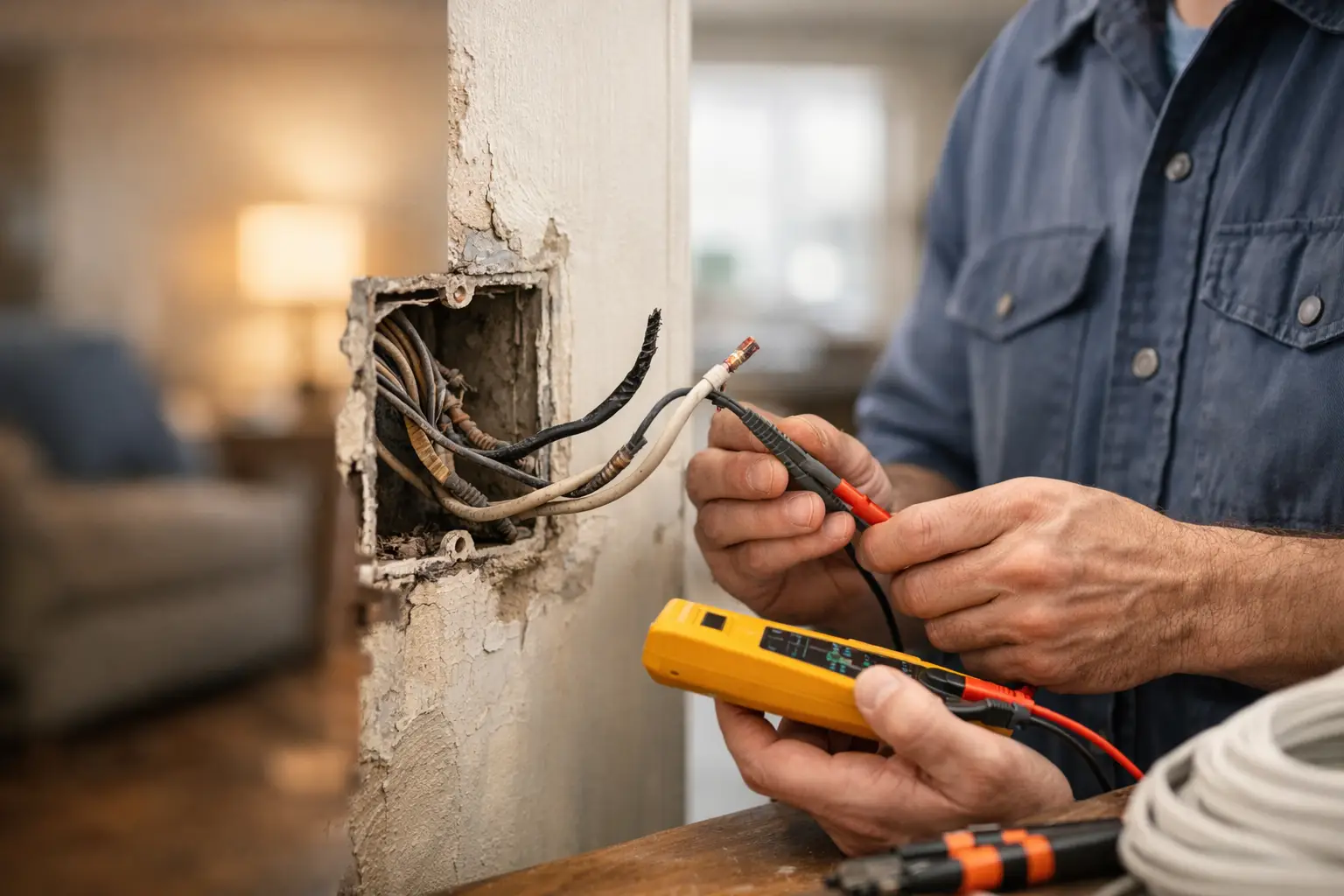

A breaker that trips once after a storm may be a minor issue. A breaker that trips repeatedly, lights that dim when the microwave starts, or outlets that feel warm are different. If you are asking when should wiring be replaced, the answer is usually not based on age alone. It comes down to the condition of the system, the electrical demands on the property, and whether there are signs that safety or reliability is being compromised.
For Las Vegas homeowners, property managers, and business owners, electrical wiring deserves attention before it becomes an emergency. A qualified electrician can identify whether a targeted repair is enough or whether a larger rewiring project will protect your property, equipment, and the people using the space.
When Should Wiring Be Replaced? Key Warning Signs
Electrical wiring is mostly hidden behind walls, ceilings, and panels, so problems can develop quietly. That is why visible symptoms matter. They often point to loose connections, deteriorated insulation, overloaded circuits, outdated materials, or previous work that was not completed correctly.
Frequent breaker trips are one of the clearest signs to investigate. A breaker is designed to shut off power when a circuit is overloaded or a fault occurs. Resetting it once may be reasonable after identifying a temporary overload. Resetting it repeatedly without finding the cause is not a solution. The circuit may need to be repaired, divided into additional circuits, or rewired.
Flickering or dimming lights are another concern, especially when the issue happens in several rooms or when larger appliances turn on. A single loose bulb is simple. Widespread flickering can indicate a loose connection, a circuit problem, or an issue at the electrical panel. These conditions should be diagnosed promptly because loose electrical connections can create heat.
Pay attention to outlets and switches as well. Discoloration, scorch marks, buzzing, a burning odor, sparks, or warmth at an outlet or switch are not normal. Turn off the affected circuit if it can be done safely and arrange for professional service. Do not continue using an outlet that appears damaged just because it still provides power.
Other signs that deserve an inspection include:
- Two-prong outlets with no grounding where modern electronics are used
- Extension cords or power strips being used as permanent solutions
- Outlets that do not hold plugs securely
- Shocks or tingling when touching an appliance or switch
- Aluminum, knob-and-tube, or visibly brittle wiring insulation
- A panel with corrosion, damage, or insufficient capacity for the building
One sign does not automatically mean every wire in the building must be replaced. It does mean the system needs a proper evaluation rather than a guess.
Age Matters, but Condition Matters More
Many homes in Las Vegas are newer than properties in older metropolitan areas, but age still matters when a home has undergone multiple remodels, additions, or owner-installed upgrades. Wiring can last for decades when it was installed correctly, remains undamaged, and serves appropriate loads. It does not come with a universal expiration date.
A property built 40 or 50 years ago may have safe copper wiring that only needs a panel upgrade, additional circuits, or replacement of aging devices. On the other hand, a newer building can have serious concerns if it has poor connections, water damage, rodent damage, improperly modified circuits, or electrical work completed without permits.
The type of wiring is particularly relevant. Knob-and-tube wiring, found in much older homes, was not designed for the electrical demands or insulation practices used today. Aluminum branch-circuit wiring, more common in certain homes built from the mid-1960s through the early 1970s, requires specialized assessment and properly rated components. Damaged cloth-insulated wiring may also warrant replacement because the insulation can become fragile over time.
An inspection gives you facts. An experienced electrician can assess conductor condition, grounding, circuit loading, panel capacity, connections, and code-related concerns before recommending a repair or replacement plan.
Renovations Can Trigger the Need for New Wiring
A remodel is often the right time to address electrical wiring, even if there are no obvious failures. Once walls are open, replacing outdated wiring or adding circuits is generally more practical and less disruptive than doing the work later.
Kitchens are a common example. Modern kitchens use microwaves, dishwashers, disposals, refrigerators, ventilation equipment, countertop appliances, and often high-demand cooking equipment. An older kitchen circuit layout may not safely support the way the space is used now. The same is true for remodeled bathrooms, home offices, garages, workshops, outdoor living areas, and accessory dwelling spaces.
Smart home upgrades can also change the electrical plan. New lighting controls, security systems, automated shades, EV chargers, and dedicated equipment may require additional capacity, wiring pathways, or a service upgrade. The goal is not to add equipment until the panel is full. It is to build an electrical system that is safe, organized, and ready for how you actually live or operate.
For commercial tenants, wiring should be evaluated during tenant improvements. A retail shop, office, restaurant, salon, or medical space has distinct power, lighting, data, and equipment needs. Reusing old circuits without confirming their condition and capacity can lead to costly interruptions after opening day.
Repair, Partial Rewire, or Full Rewire?
Not every electrical issue calls for a complete rewire. The right scope depends on what is found during troubleshooting and on your future plans for the property.
A focused repair can make sense when the issue is isolated, such as a damaged outlet, a failed switch, a loose connection, or a single compromised circuit. A partial rewire may be the practical choice when one area of the home is being remodeled, a garage needs new circuits, or older wiring is limited to a particular section of the building.
Full rewiring is more likely when wiring is broadly deteriorated, unsafe wiring methods are present throughout the property, circuits are consistently overloaded, or the electrical layout cannot support modern usage. It can also be the best long-term decision when extensive renovations are already planned. While a full rewire has a higher upfront cost and may require wall access, patching, and coordination with other trades, it can reduce recurring repair needs and improve the property’s safety and usability.
A trustworthy contractor should explain the reason behind the recommendation, identify what is urgent versus what can be planned, and provide a clear scope of work. You should not be pressured into a full replacement without evidence that the system requires it.
Do Not Ignore Panel Capacity and Service Size
Wiring and the electrical panel work together. Even new branch wiring cannot solve a system that lacks sufficient panel capacity or has a failing main service. If you are adding an EV charger, central air equipment, a hot tub, electric appliances, a workshop, or a commercial load, a load calculation may show that your service needs an upgrade.
Symptoms of an undersized or overloaded system can include frequent tripping, limited room for new circuits, and reliance on tandem breakers or temporary workarounds. However, panel upgrades are not automatically needed every time a breaker trips. The decision should be based on the equipment, calculated demand, panel condition, and planned use of the property.
This is especially relevant in Las Vegas, where air conditioning is not optional for much of the year. Cooling equipment places substantial demand on a home or commercial electrical system. Reliable wiring and properly designed circuits help protect that equipment during peak summer use.
What to Do If You Suspect a Wiring Problem
Do not open walls, remove panel covers, or attempt to repair wiring yourself. Electrical work can expose you to shock, arc-flash, and fire hazards, even when a circuit appears to be off. If you notice smoke, active sparking, a burning smell, or heat at an electrical device, treat it as urgent. Shut off power if it is safe to do so, keep people away from the area, and contact emergency services when there is an immediate fire risk.
For non-emergency concerns, write down what you are seeing. Note which outlet, room, or appliance is involved; when the problem occurs; and whether a breaker trips. This information helps an electrician troubleshoot efficiently. Avoid repeatedly resetting a breaker or covering a damaged outlet with furniture and hoping the issue goes away.
RS Electric LLC provides professional electrical troubleshooting, upgrades, repairs, and rewiring solutions for residential and commercial properties in Las Vegas. A licensed, insured evaluation can separate a small repair from a larger safety issue and give you a straightforward plan based on your property’s actual needs.
Electrical wiring should support the way your home or business operates without becoming a source of uncertainty. If something feels off, address it while the problem is still manageable, not after it disrupts your day or puts the property at risk.
Need a licensed electrician in Las Vegas?
RS Electric LLC handles electrical troubleshooting and repair for homes and businesses across Las Vegas, Henderson, North Las Vegas and Summerlin. Licensed, bonded & insured (NV C-2 #0078370), certified MBE, 4.9★ on Google. Se habla español.