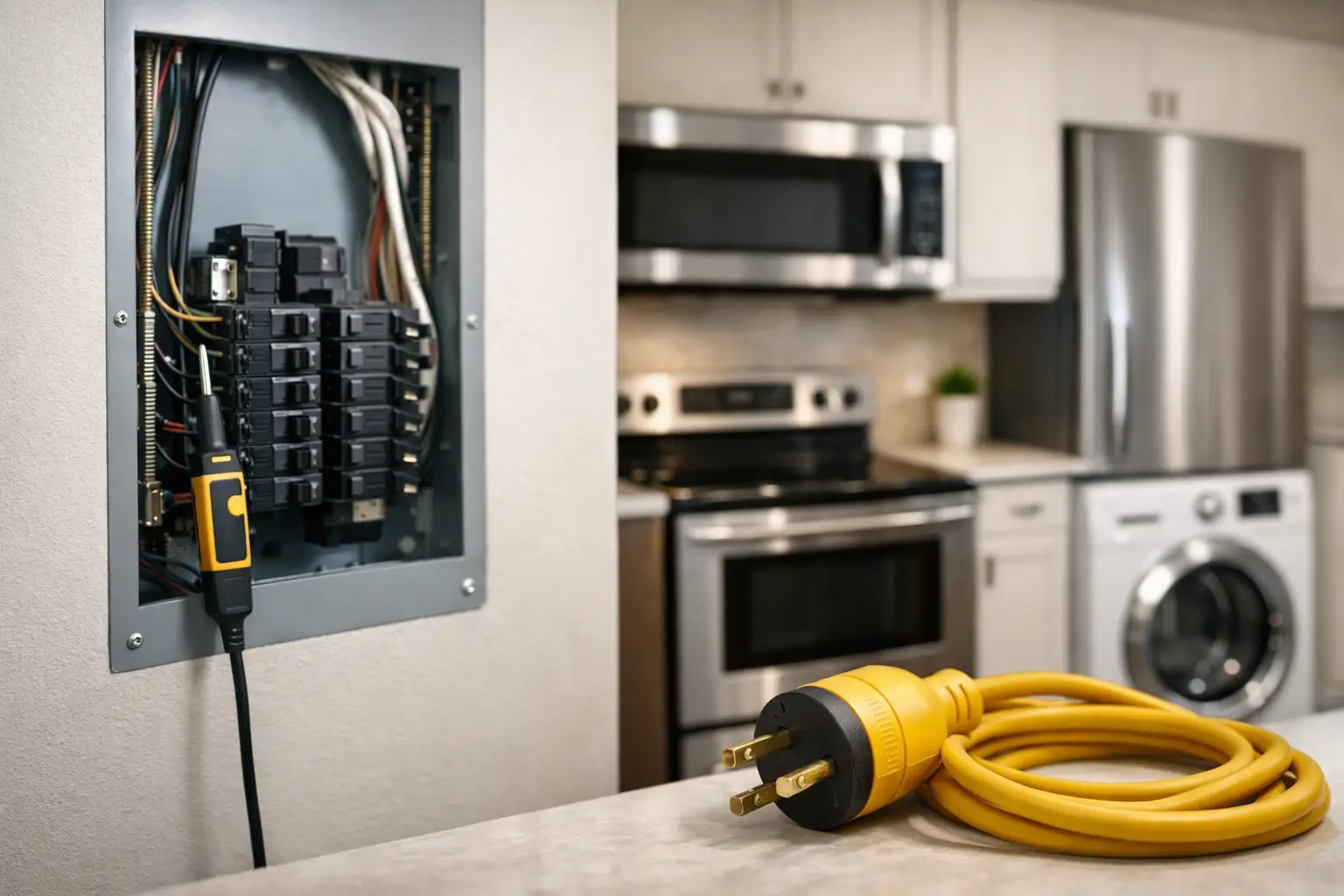

A microwave trips the breaker every time the toaster runs. The garage fridge works fine until summer hits. A new dishwasher goes in, and suddenly the kitchen circuit starts acting up. In many homes, those problems point to the same issue: the wrong appliance is sharing power when it should be on a dedicated circuit for appliances.
This is one of the most common electrical concerns we see in homes and light commercial spaces. People often assume a breaker tripping here and there is normal. It is not. Repeated trips, dimming lights, warm outlets, or appliances that lose power under load usually mean the circuit design does not match the equipment being used.
What a dedicated circuit for appliances actually means
A dedicated circuit serves one appliance or one specific load. That circuit has its own breaker and wiring path back to the electrical panel, without other outlets, lights, or equipment sharing that capacity.
The point is simple. Large appliances draw serious current, especially when motors start or heating elements kick on. If those loads share a circuit with other devices, the wiring and breaker can be pushed past what they were meant to handle. A dedicated circuit helps control that risk and gives the appliance a more stable power supply.
In practical terms, your refrigerator, microwave, dishwasher, disposal, range, dryer, water heater, HVAC equipment, and similar loads may need their own circuit depending on the appliance rating, local code requirements, and how the space is wired. Some are almost always dedicated. Others depend on size, age, and installation details.
Why dedicated circuits matter more than most property owners think
The biggest reason is safety. Overloaded circuits can overheat conductors, damage outlets, wear out breakers, and create fire hazards. A breaker that trips once in a while is doing its job. A breaker that trips often is telling you something is wrong.
There is also a performance issue. Appliances do not run well when voltage drops under shared load. Motors can strain, compressors can short cycle, and electronics can fail earlier than expected. That is expensive in a house and even more disruptive in a tenant space or small business.
Then there is code compliance. Many appliances are required by electrical code to be on dedicated circuits. That matters during remodels, panel upgrades, insurance reviews, inspections, and property sales. If unpermitted or outdated wiring is discovered later, the fix is usually more expensive than doing it properly up front.
Which appliances usually need a dedicated circuit
Some equipment is a clear yes. Electric ranges, ovens, dryers, water heaters, air conditioners, furnaces, dishwashers, garbage disposals, built-in microwaves, sump pumps, and refrigerators commonly need their own circuit. Laundry equipment almost always does.
Kitchen and utility areas are where confusion happens most. A homeowner may think, “It plugs in, so it can share.” That is not how circuit planning works. A countertop microwave can draw enough power to interfere with other small appliances. A second refrigerator in the garage may seem minor, but paired with a freezer, power tools, or outdoor equipment, it can overload a general-use circuit fast.
Window AC units, tankless water heaters, EV chargers, and spa equipment are other examples where dedicated circuits are usually necessary. These are not good candidates for improvising with existing wiring.
Dedicated circuit for appliances in kitchens and laundry rooms
Kitchens are the most circuit-heavy rooms in a home for good reason. There are multiple high-demand loads operating in a small area, often at the same time. The code reflects that. Countertop receptacles, refrigeration, cooking appliances, dishwashing equipment, and disposal units all need careful planning.
Laundry rooms have a similar issue. Washers may be modest compared with dryers, but modern laundry spaces often include extra loads like utility sinks, irons, steamers, and charging stations. If an older home has a laundry area tied into a nearby general lighting circuit, that setup may no longer be appropriate.
This is where experienced troubleshooting matters. The right answer is not always adding more breakers without a plan. Sometimes the panel has capacity. Sometimes it does not. Sometimes the wiring can be reworked efficiently. Sometimes a broader service or panel upgrade makes more sense than piecemeal additions.
Signs your appliance may need its own circuit
If the breaker trips when a specific appliance turns on, pay attention. The same goes for lights dimming during startup, outlets that feel warm, extension cords being used for permanent appliances, or multiple kitchen and utility devices fighting for the same receptacle.
Another red flag is a remodel that added new equipment without matching electrical updates. A lot of homes in Las Vegas have had kitchens, garages, casitas, or outdoor areas updated over time. The finishes look new, but the wiring strategy underneath may still reflect an older electrical demand.
You should also be cautious if you are adding equipment with a motor, compressor, or heating element. Those loads behave differently than a lamp or phone charger. Startup current and sustained amperage matter, and guessing can lead to nuisance trips or damaged equipment.
Can you just swap in a larger breaker
No, not as a fix.
This is one of the most dangerous shortcuts property owners can take. A breaker is sized to protect the wiring behind the wall. If a 15-amp or 20-amp circuit keeps tripping, replacing the breaker with a larger one without verifying conductor size, receptacle rating, and load calculations can allow the wire to overheat before the breaker trips.
A proper solution starts with identifying the actual load, the wire size, the breaker size, the circuit path, and whether that appliance is meant to be dedicated. Sometimes the repair is straightforward. Other times the issue exposes a larger wiring problem that should be corrected before it causes repeated failures.
New appliances often expose old electrical limits
A newer appliance is not always the problem. In many cases, it is simply more demanding or more sensitive than the older unit it replaced. A new microwave may draw more than the old one. A modern refrigerator may have electronics and compressor behavior that react poorly to unstable voltage. A new disposal may push a shared kitchen circuit over the edge.
That is why appliance upgrades and electrical upgrades often go together. If you are investing in a kitchen renovation, tenant improvement, or custom home project, the electrical scope should match the actual equipment list. Waiting until after installation usually means more disruption and a higher bill.
What a licensed electrician looks at first
The first step is load and circuit verification. That means checking the appliance rating, identifying what breaker feeds it, confirming wire size, and seeing what else is on that same line. From there, the panel condition and available capacity need to be reviewed.
In some cases, the answer is a new dedicated branch circuit from the panel to the appliance location. In others, circuits can be rearranged to balance loads more safely. If the panel is outdated, crowded, or already showing signs of stress, a larger service conversation may be warranted.
The goal is not just to stop one breaker from tripping. The goal is to create a safe, reliable electrical system that supports the property the way it is actually being used.
When this matters for commercial spaces too
Small commercial spaces run into the same issue, just with different equipment. Break room appliances, point-of-sale equipment, undercounter refrigeration, copiers, tenant improvement work, and specialty tools can all create load problems if circuits were not planned correctly.
A dedicated circuit for appliances is often part of keeping operations reliable. One overloaded line in a back room can affect productivity, damage equipment, and create service interruptions that cost more than the electrical correction itself.
For property managers and business owners, the value is not just code compliance. It is fewer callbacks, less downtime, and better protection for equipment and occupants.
Getting it done the right way
Electrical work is one of those areas where the cheapest shortcut tends to be the most expensive fix later. A dedicated circuit sounds simple, and sometimes it is. But the real question is whether the whole system supports that addition safely.
At RS Electric LLC, we approach these calls with the same mindset we bring to larger upgrades and troubleshooting work: identify the actual cause, explain the options clearly, and make the repair or installation correctly the first time. That matters whether you are dealing with one appliance in a home or planning electrical improvements across a commercial space.
If an appliance keeps tripping breakers or you are planning to install new equipment, treat that as useful warning, not a minor annoyance. A properly sized dedicated circuit can protect your wiring, improve performance, and save you from a much bigger electrical problem later. That kind of fix is not flashy, but it is exactly what keeps a property safe and dependable.
Need a licensed electrician in Las Vegas?
RS Electric LLC handles electrical troubleshooting and repair for homes and businesses across Las Vegas, Henderson, North Las Vegas and Summerlin. Licensed, bonded & insured (NV C-2 #0078370), certified MBE, 4.9★ on Google. Se habla español.